Have you ever had your posture analysed? For most, the answer to this question is no, and in those who have, the issue is often how the information gathered is applied to them in a practical way.
What a Posture Assessment Involves
We take photos of you standing relaxed from four angles: front, back and both sides. If you add a 3D scan, we also get precise measurements of your alignment and weight distribution. You can read more in our guide to what a 3D posture scan shows. We then go through everything with you, so you understand what your body tends to do.
What We Look For
- Where your head sits over your shoulders
- How your ribcage sits over your pelvis
- Whether your pelvis is tilted or shifted
- Whether you carry more weight on one side
- Side-to-side differences in the shoulders, hips and spine
Structural Integrity
The term structural integrity can be used to describe how resilient any structure is, from buildings, to bridges, and even our bodies. Just like an engineer can predict how sturdy or well designed a bridge will be by analysing its structural integrity, we can predict and understand problems in the body in a similar way.
Why Posture?
Our posture is a snapshot of our body and represents how we move. Asymmetries and imbalances stemming from the way we move can be observed in a single frame when we look at someone’s posture. For example, someone who tends to bend their spine better to the left than the right during walking will often show the same tendency in their static posture. It shows us where people’s bodies are subject to more compression, where muscles may have atrophied, and indicates tendencies and behaviours their bodies will exhibit during movement.
Isn’t Our Posture Just Unique to Us?
Something that people often get told is that everyone has their own unique posture, and that trying to improve it is unnecessary. From our experience, this advice usually comes from places where evidence of helping to fundamentally change posture is scarce. While we are all unique, we believe there are more and less efficient ways for the body to hold itself. We also see strong links between certain posture types and injuries associated with them.
The Limits of a Static Photo
A posture photo is a single frame. It shows the tendencies your body holds, but not how it moves. That’s why we always pair posture analysis with slow-motion gait analysis: posture tells us where to look, and movement tells us what’s driving it.
First Step Towards Better Movement
In order to change the way we move, and as a result, have our posture naturally improve over time, we must first start with standing posture itself. It’s one of the first things we work to understand in our training, and is a crucial starting point in order to lay the foundations needed in order to begin to exercise with good technique.
Frequently Asked Questions
What is static posture analysis?
It’s an assessment of how you hold yourself standing still, usually from photos taken from four angles, to spot asymmetries and imbalances.
Can posture analysis help with pain?
On its own, it doesn’t fix anything, but it shows where your body is under more strain. That makes it a useful starting point for working out what’s driving your pain.
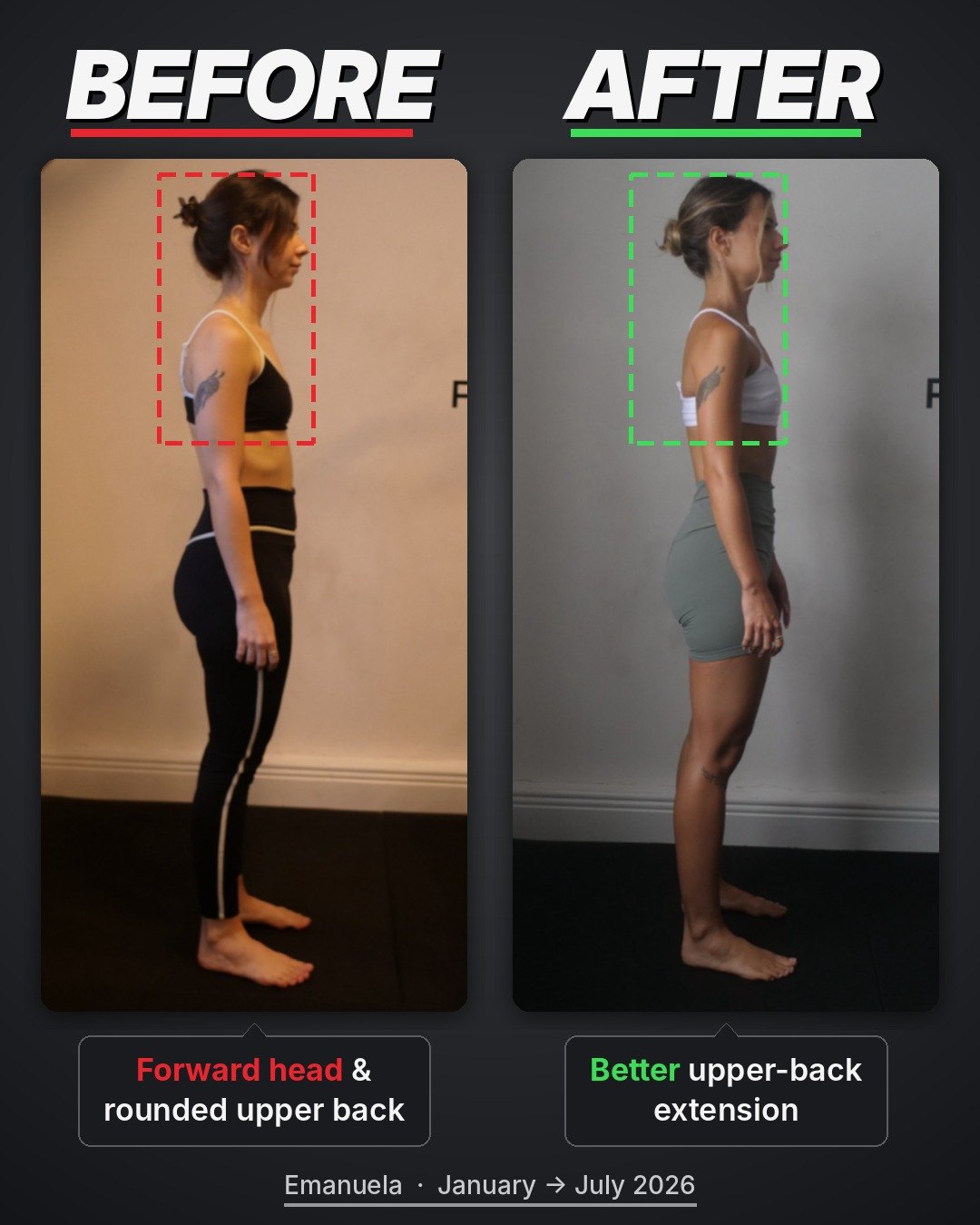
You can read more about our gait and posture analysis and posture correction, or see a real before and after in Emanuela’s story. We see clients from across Dublin and beyond at our clinic in Donabate, just 10 minutes from Dublin Airport.