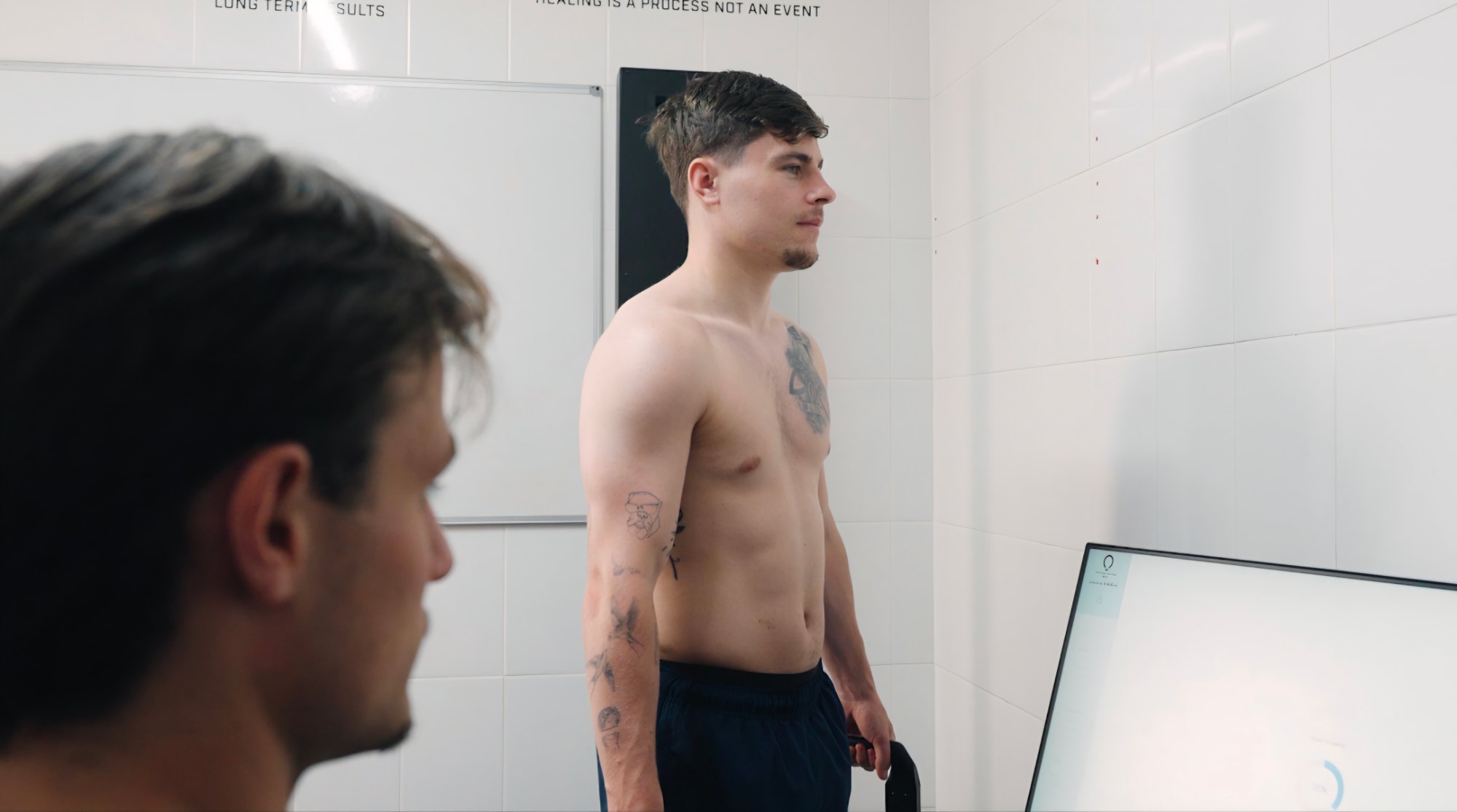
If you’ve ever been told your posture is “off” but never quite understood what that meant, a 3D posture scan can make it a lot clearer. In about 30 seconds it creates a detailed model of your body, so you can see how you’re standing, where you carry your weight, and how that changes over time.
At Functional Patterns Dublin we were the first clinic in Ireland to use the Scaneca 3D scanner. Here’s what it does, what it doesn’t, and whether it’s worth it for you.
How Does a 3D Posture Scan Work?
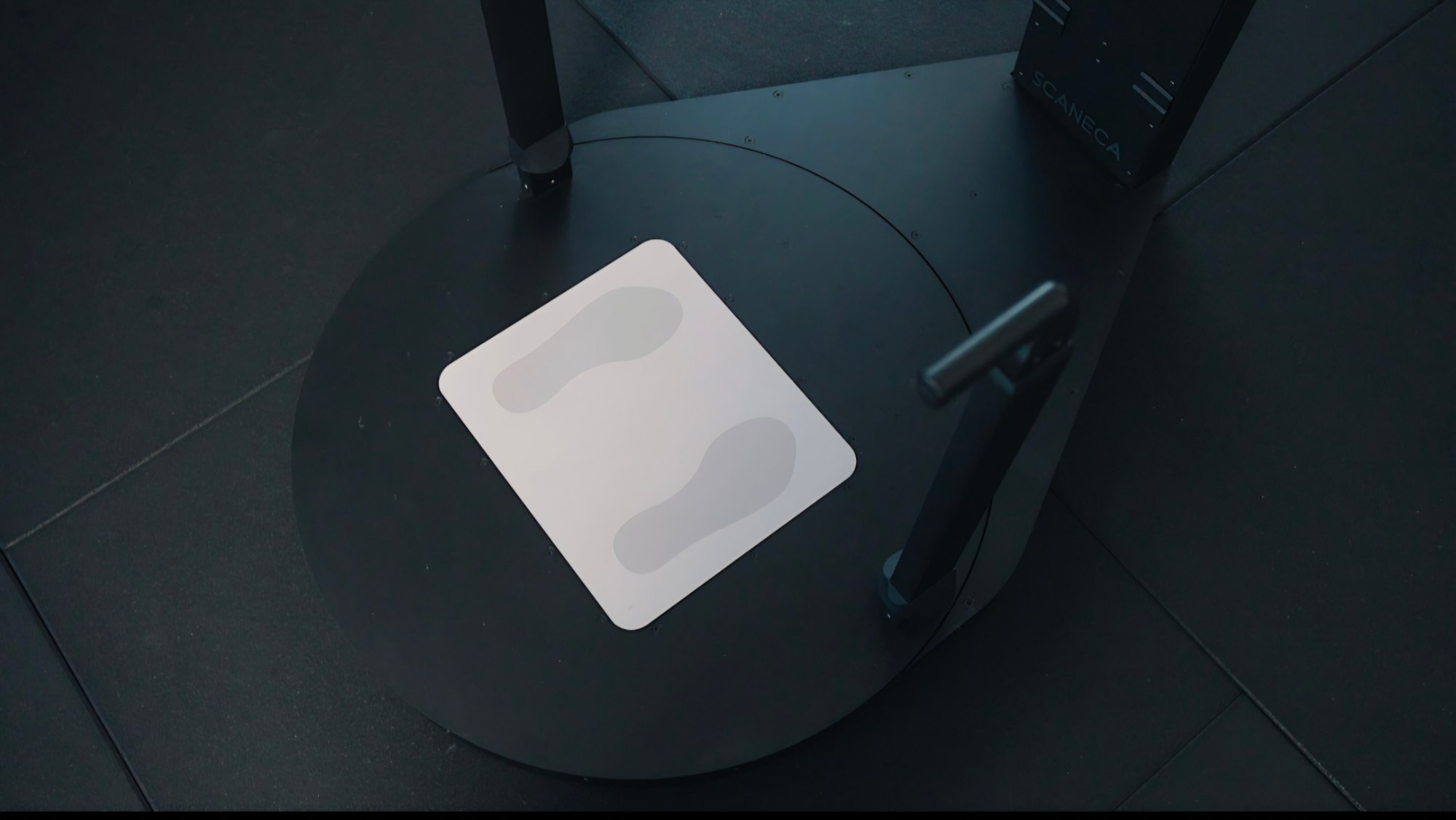
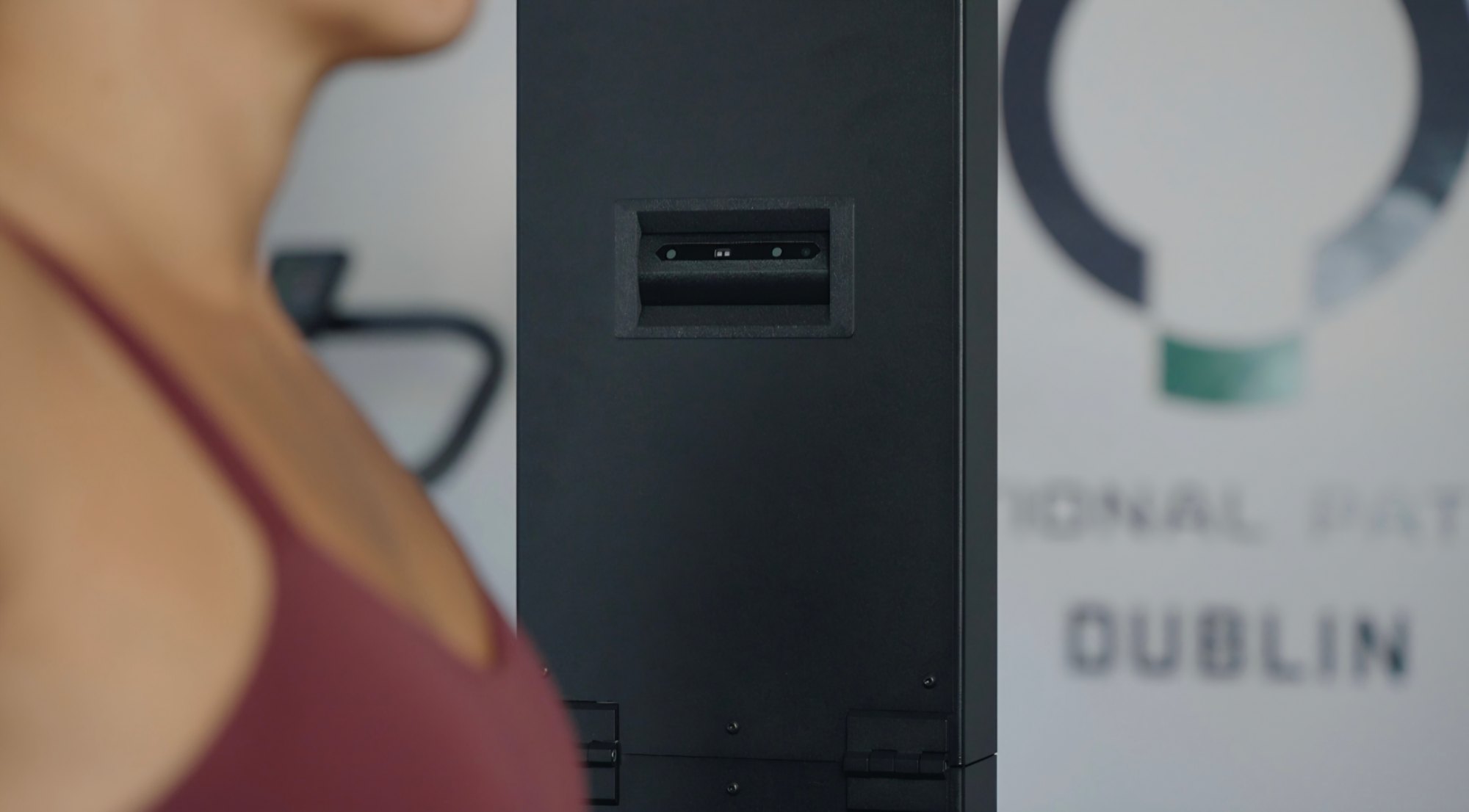
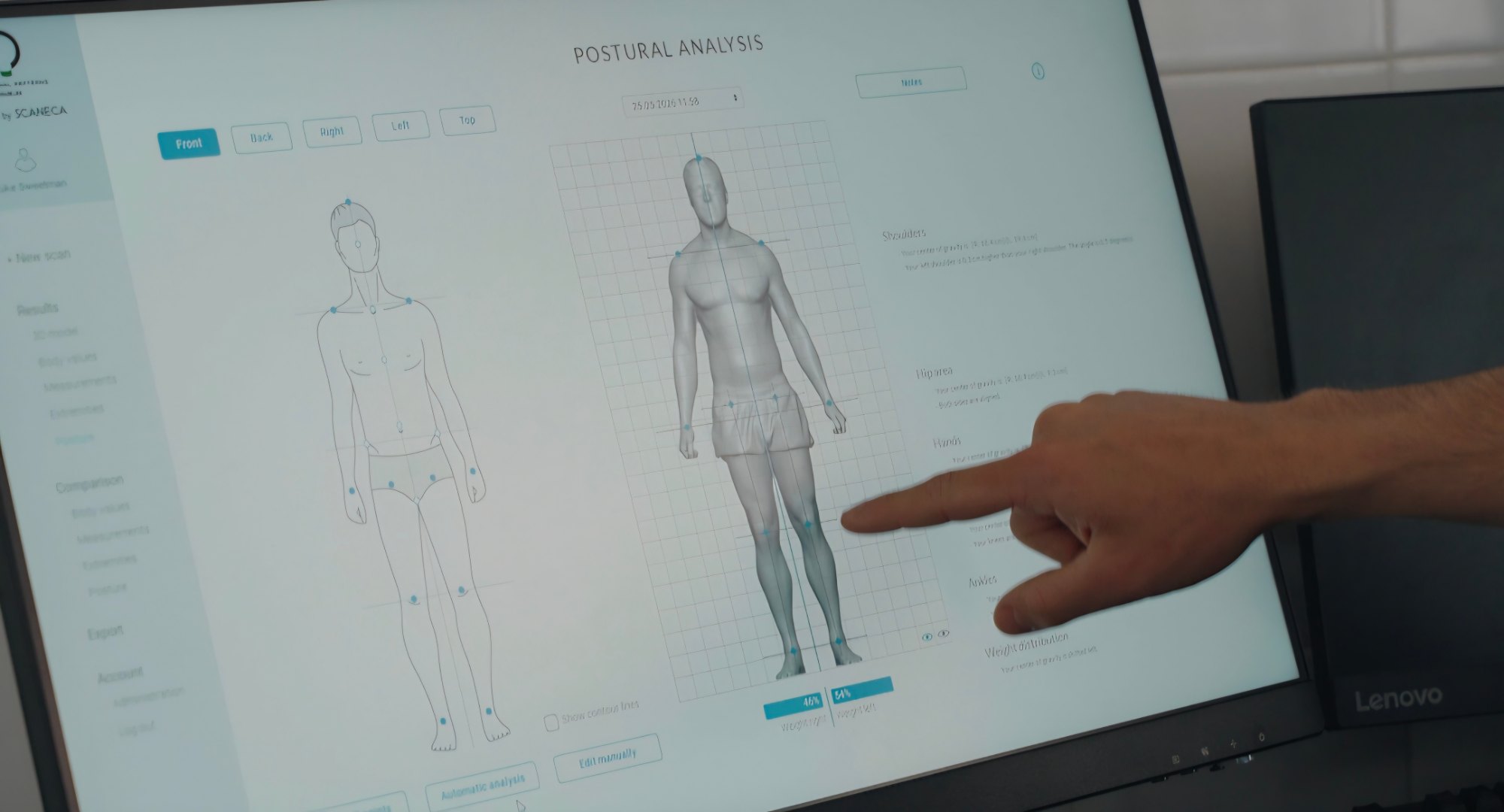
You stand still on a platform while it slowly turns you through 360 degrees. Light-based lasers capture the shape of your body from every angle, including from above, and build a 3D model of you in about 30 seconds. It’s contact-free, there’s no radiation, and you stay in light clothing throughout.
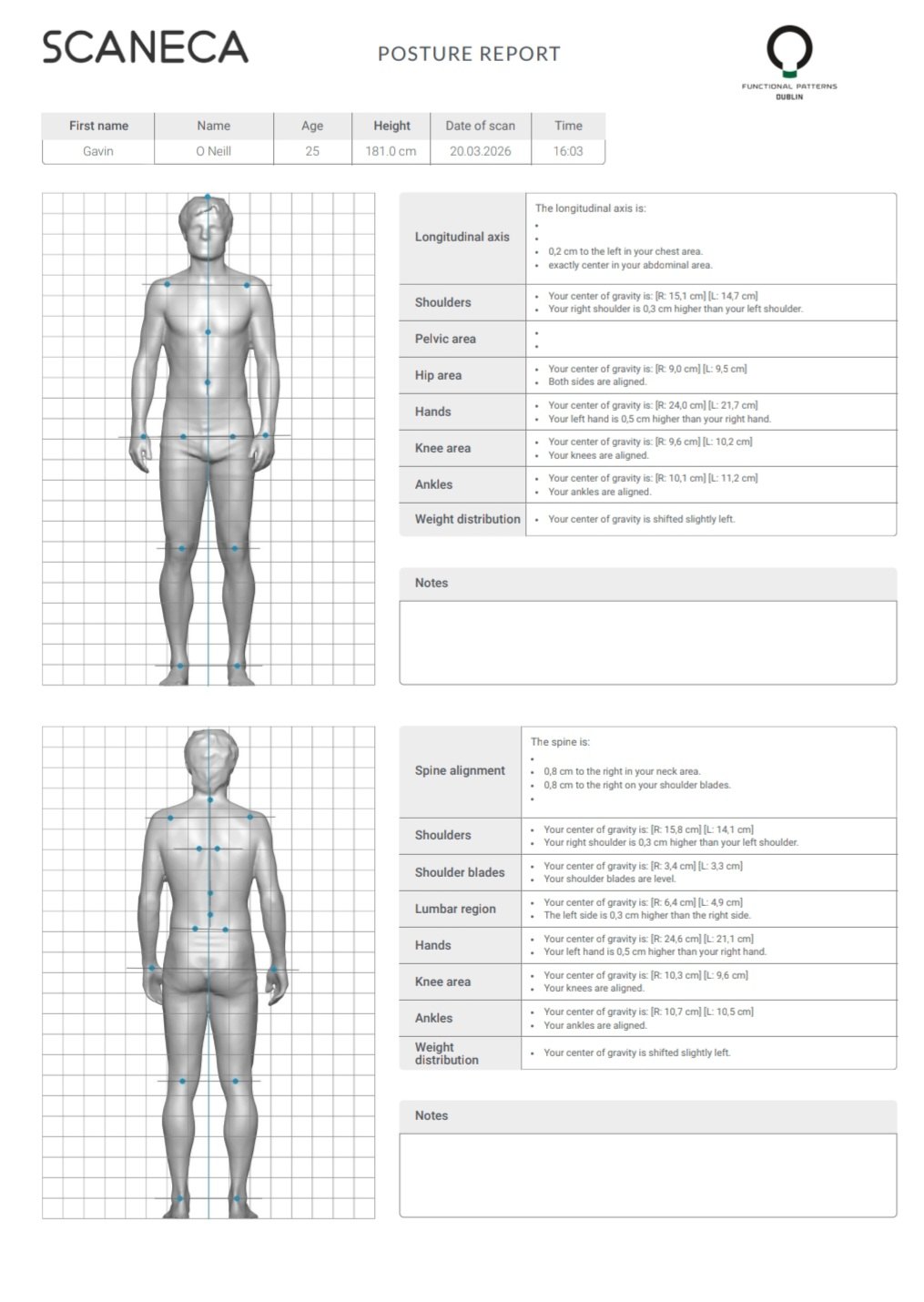
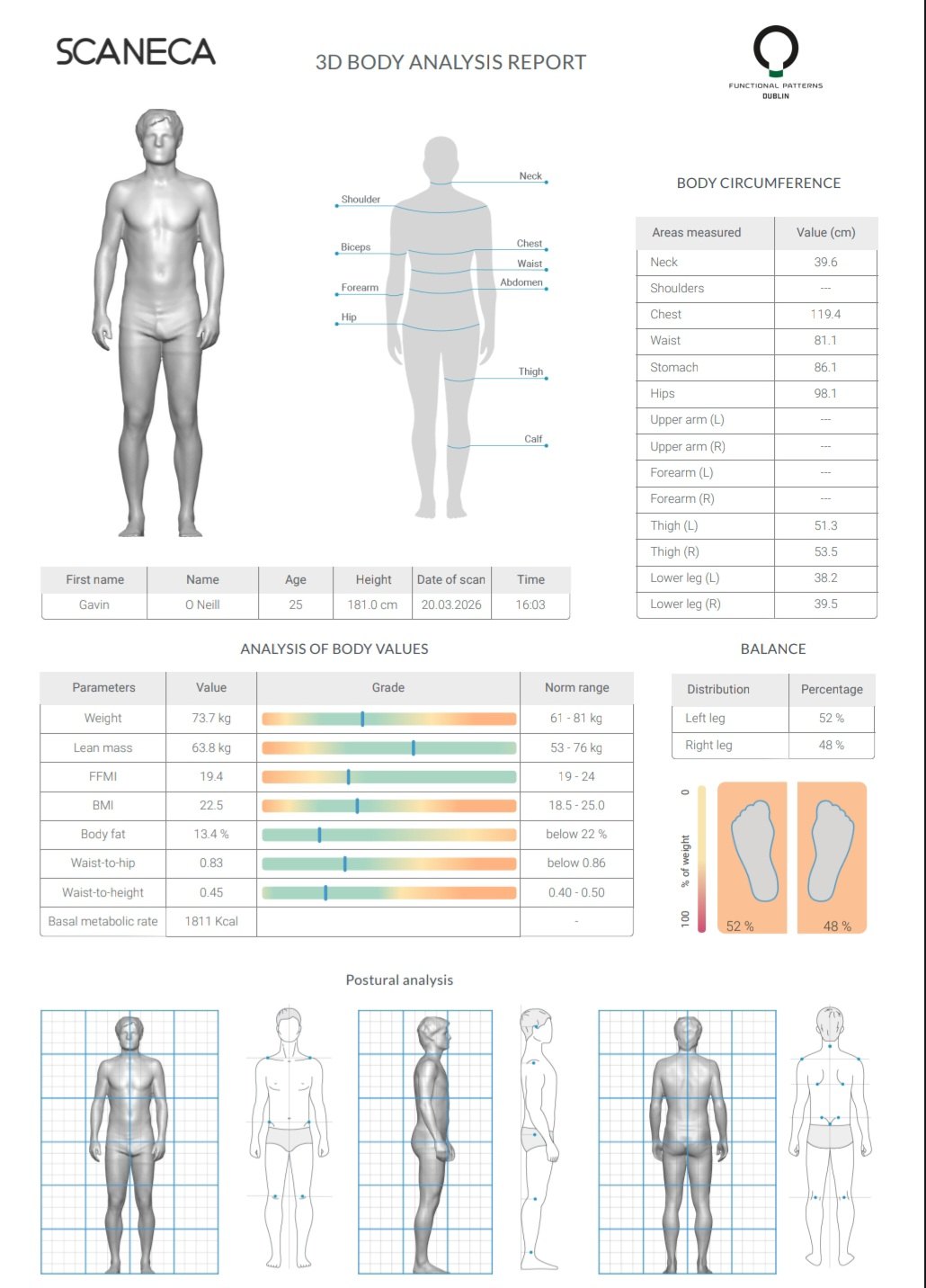
The scan is then reviewed with one of our team, and you get a report emailed to you afterwards.
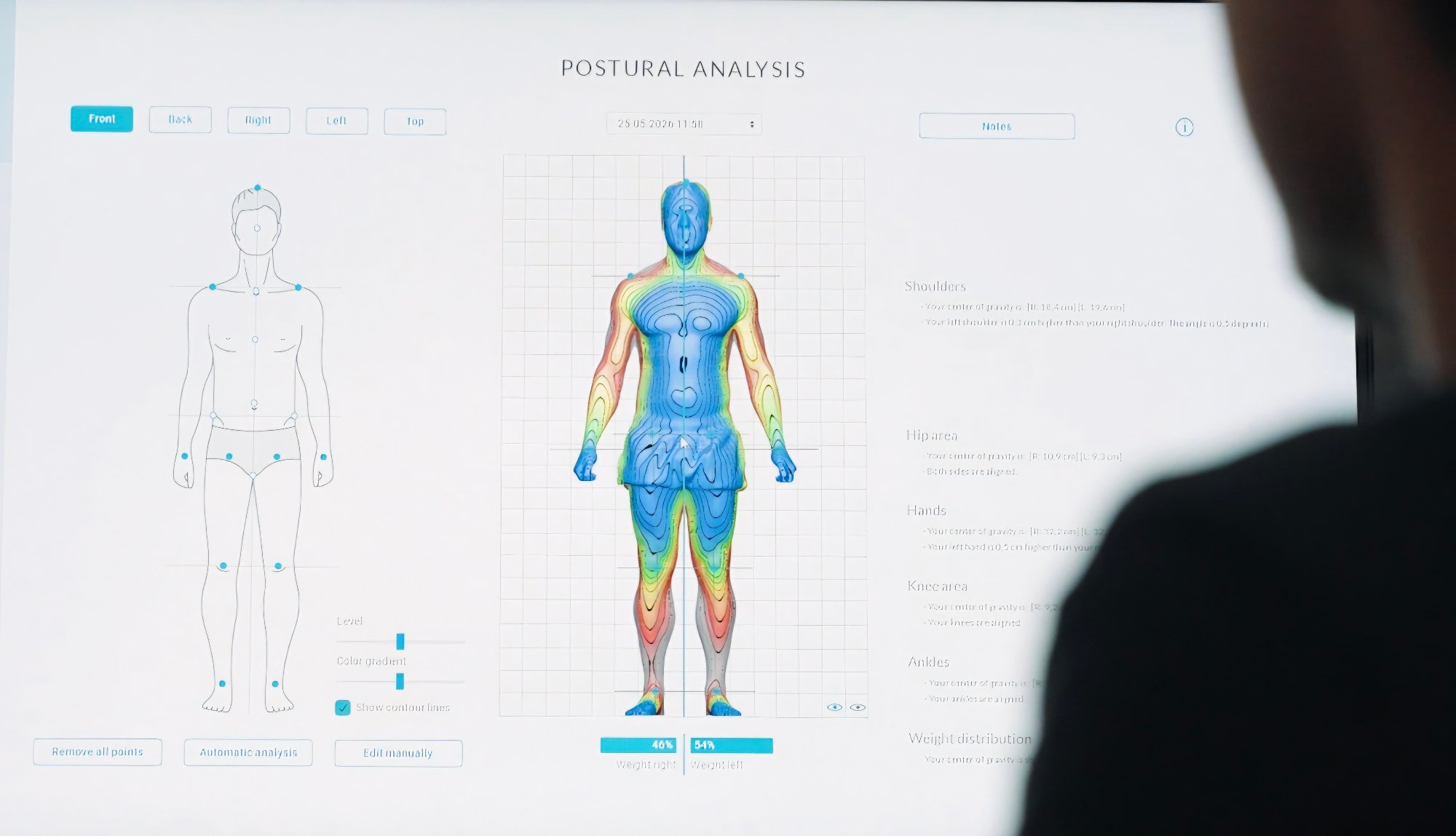
What the Scan Measures
- Posture and alignment: the position of your head, ribcage and pelvis, and how they line up
- Symmetry: side-to-side differences, including rotation that’s hard to spot by eye
- Weight distribution: whether you’re loading one side more than the other
- Body composition estimates: weight, BMI, body fat percentage, fat-free mass and body measurements
- Change over time: a baseline you can compare against at later scans
What a 3D Scan Doesn’t Show
It’s just as important to know the limits:
- It doesn’t see your bones. It measures the shape of the outside of your body. It can show asymmetry consistent with a scoliosis, but scoliosis itself is diagnosed on X-ray.
- It’s a snapshot of you standing still. Posture is only part of the picture. How you walk and move tells us much more, which is why we pair the scan with slow-motion gait analysis.
- Body composition values are estimates. They’re useful for tracking your own changes over time, but they’re not a medical-grade measurement like a DEXA scan.
3D Scan vs X-ray vs Gym Body Scans
- X-ray: shows bones and is used to diagnose structural problems, but involves radiation and isn’t something you’d repeat regularly to track posture.
- Gym body-composition scales: usually estimate body fat by passing a small electrical current through the body. They tell you nothing about posture.
- A 3D posture scan: combines posture, symmetry and body composition estimates in one radiation-free scan, which makes it practical to repeat every couple of months.
Who Is a 3D Scan Useful For?
- People with pain or injuries that keep coming back
- Anyone who feels uneven, twisted or “off” but can’t pinpoint why
- People who want to improve their posture and see proof that it’s changing
- Athletes and active people looking for an objective baseline
- Anyone starting a training programme who wants a clear starting point
How It Fits Into Your Assessment
You can book the scan on its own (€120), or add it to our 90-minute initial assessment for €70. That combination is our comprehensive assessment (€250 in total), which also includes posture photos, slow-motion gait analysis and your first training session. Existing clients can book reassessment scans every couple of months to measure progress against their baseline.
Book a comprehensive assessment
Frequently Asked Questions
How long does the scan take?
The scan itself takes about 30 seconds. A standalone scan session, including going through your results, takes about 20 minutes.
What should I wear?
Fitted clothing, like shorts and a sports top, so the scanner can capture your shape accurately.
How often should I be rescanned?
Every couple of months is a good rhythm for most people. That’s long enough for meaningful changes to show.
Is it safe?
Yes. It’s contact-free and uses light-based lasers, not radiation.
You can read more on our 3D postural scanning page, see a real before and after in Emanuela’s story, or find out how we approach posture correction. We see clients from across Dublin and beyond at our clinic in Donabate, just 10 minutes from Dublin Airport.