Decreasing bone density and muscle mass becomes a real concern for many as they pass 40 years of age. Our bodies naturally begin to slow down, and holding onto that precious muscle can become more difficult. Woman in particular face challenges as they pass through perimenopause and menopause, and exercise during these times becomes especially important. Hormone activity changes, and natural changes associated with age mean that bone density can decrease, and muscle mass can be lost.
In this blog we will discuss what is commonly advised, why this advice is not always the best to follow, and what alternatives can be used to give us a better outcome overall. Through our experience helping many women to improve their movement capacity we have found that most want to achieve the same things. To be able to move well into old age, stay active, and feel good in their bodies.
The Usual Advice: Weight Bearing Exercise and Strength Training
What people generally mean when they talk about “weight bearing” exercise is exercise that loads the bones. Essentially most forms of exercise fall into this category, but the specific idea of loading the body with resistance is to increase muscle mass and stimulate bone density.
The vehicle for this is usually some form of strength training. This is something that is well documented and backed by a lot of science so it is rarely questioned. So it seems simple, get to the gym, start doing loaded versions of exercises like squats, hinges, presses and pulls and Bob’s your uncle.
The problem however is what if this comes with a trade off? What if this approach doesn’t account for how someone moves and the issues they currently have? Our advice, before you rush to the nearest bootcamp or strength class, take stock of how your body feels day to day and is actually functioning first.
When Traditional Weight Training Aggravates Existing Problems
Most people arrive to our doors when traditional training has left them in a twist, and while this type of strength training might work for some, it certainly doesn’t work for all. A lot of people we meet in our facility have started to accumulate aches and pains as a result of the training they are doing.
If we are dealing with imbalances and asymmetries in our posture and movement that we are unaware of, loading the body heavily may serve to compound these issues rather than help correct them. If you are in the genetic 1% that have little to no issues (like high level athletes) then those methods of training may bring only positive results, but for most average people more care is required.
The risk to reward ratio must stack up in your favor, not against you.
Functional Patterns: A Different Approach to Building Strength
At Functional Patterns Dublin we are more concerned about building muscles and strength relative to the functions our bodies have evolved to do most. Our bodies were built around movements like standing, walking, running, and throwing, and these primary movements should be in clear focus when trying to improve strength and build healthy muscle.
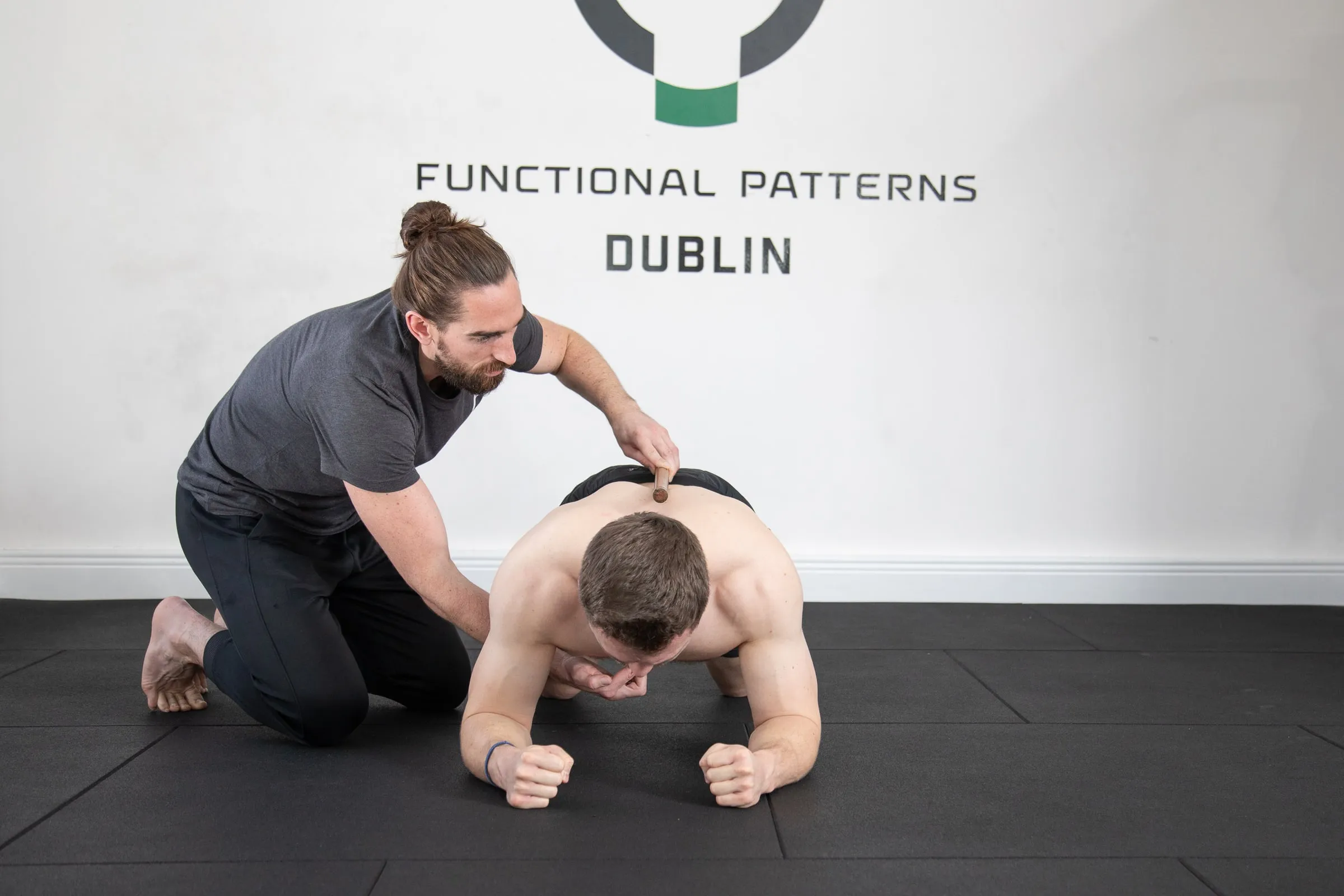
In our facility, we start by assessing your gait and posture in order to get an idea of how your body executes these crucially important functions. Our muscles are designed to work together in order for us to move well and without compensation. These movements don’t just involve just lifting weights up and down, they involve full body rotations, opposing limb movements and weight transferring from one side of the body to the other.
How Connected, Multidirectional Movement Changes How We Load The Body
When we train someone we use different ways of loading the body like using horizontal force and dynamic movements that better replicate the demands of day to day life. Typically strength routines in the gym revolve around one dimensional lifting patterns that load the skeleton vertically. The real magic however happens when you begin to put force through the whole body in 3 dimensions at once.
Interestingly the total force and loading the body receives can end up being much more even though the weight may be lower than doing heavy compound lifts like squats and deadlifts with a lot of weight. This is due to the fact that when we integrate more planes of motion, the demands on the fascia and musculature can be much more complete relative to how we are designed to move.
Can You Build Muscle This Way? A Case Study
Recently, one of our clients completed 10 weeks of weekly classes with us and ended up getting some very interesting results. She attended once per week and practiced at home another one to two times while also being mindful of her diet. She gained 1.3kg of lean mass and lost 2.4% body fat. All this while in her early 50s.
It should be mentioned that she has been a client for around one year and understands the basics of our training very well. This just goes to show that with precision and the right application, even in middle age, the body is capable of building muscle without what is traditionally considered heavy strength training in the gym.
Creating An Opportunity For Better Hormone Signaling
Another aspect of this topic which is not typically considered is the state the body is in and how efficiently it can signal the right hormone action. If we are moving poorly despite being “strong”, our bodies may spend more time in a stressful “fight or flight” state which is not conducive to building and maintaining muscle. Being in pain and discomfort due to bad training only exacerbates this mechanism.
If we move more efficiently and without pain, our bodies can spend more time in “rest and digest”. This is much better in terms of lowering stress hormones like cortisol and increasing hormones like human growth hormone and testosterone. Although this is a very difficult thing to prove with research, it makes logical sense that the more balance your body is in, the better all systems work.
Getting Started
If you are interested in coming to our Donabate facility to find out more about how help woman gain muscle, get out of pain and improve their overall wellbeing as they age get in touch with us today and book your assessment.