Scoliosis can be a very challenging thing to deal with, and understandably, an issue that can bring huge feelings of fear and confusion for anyone that has been diagnosed with it. Many people are told to “observe” and wait to see whether their curve progresses. Conventional care often focuses on monitoring and slowing progression, and we believe more can be done proactively alongside it.
The aim of this blog is to break down what this diagnosis may actually mean for someone, clarify what a scoliosis is, what is conventionally thought possible in terms of treatment, and what we believe can be achieved using the right approach.
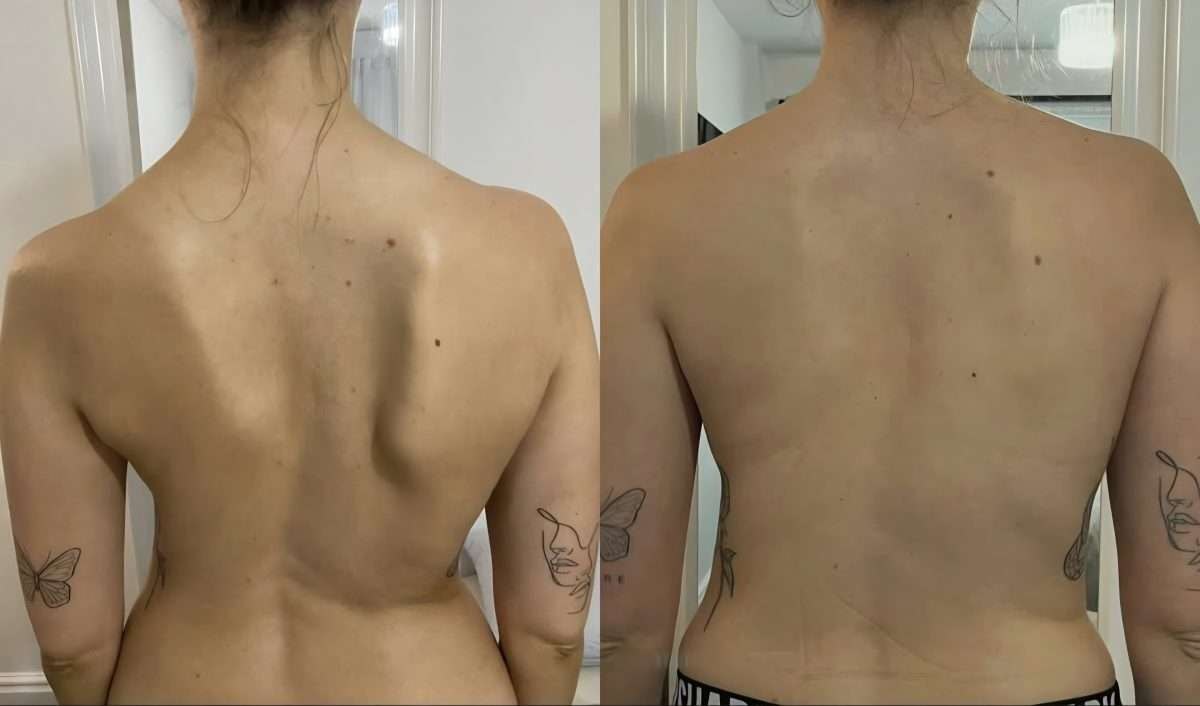
What Scoliosis Actually Is (And What it Isn’t)
Most people understand scoliosis to be a curvature of the spine, but this definition alone can be misleading. Things like ribcage shifts, or lateral flexions of the spine may look like spinal curvature to some, but to be classified as a true scoliosis certain characteristics must be present. Side to side spinal movement is more true of spinal asymmetry and dysfunction than structural scoliosis.
Structural scoliosis is a three-dimensional change in the spine. It is confirmed on X-ray as a sideways curve of 10 degrees or more (the Cobb angle) together with rotation of the vertebrae, and it often comes with changes to the front-to-back curves too:
- Lateral Spinal Flexion: Side to side movement like bending the spine either to side when viewed from the front or the back.
- Spinal Rotation: Axial rotation happening in the transverse plane. This can be more obvious when viewed from above.
- Sagittal Plane Changes: Changes in the spinal curves front to back. Think of thoracic kyphosis or lumbar/lower back excessive curvature when viewed from the side.
Sometimes people have been told somewhere along the line that they have a “curvature” in their spine when really they have a very common postural asymmetry. For this reason it’s hugely important to have a proper assessment, and an X-ray to confirm the diagnosis.
What Causes it?
Sometimes scoliosis is congenital, present from birth, but in most cases it develops during adolescence while someone is still growing. This is called idiopathic scoliosis, meaning the exact cause isn’t known. In our view, poor pressure management during movement is a big part of the picture. While the above criteria explain and classify a scoliosis, we believe an underlying pressure issue plays a key role. Poor pressure distribution in the thorax during movement can cause parts of the spine to collapse and compress more than others, contributing to a three-dimensional curvature of the spine.
Why “Posture Correction” Alone Falls Short
Although posture is hugely relevant, it’s important to look at it as a single-frame snapshot of what happens when we move. It gives us information about what tendencies our body exhibits during movement itself, and is a symptom rather than the root problem. How somebody’s spine looks during standing is directly correlated to the ways it moves during walking, and for this reason, attempts to change posture without working through dynamic movement are unlikely to last.
Movement Quality Matters Most
In our view, how someone walks is one of the most important factors to look at with a scoliotic curve. That’s why at Functional Patterns we put so much weight on analyzing gait as well as posture. The way the arms, ribcage, and pelvis interact during walking all contribute to how symmetrically the spine moves, and ultimately what someone’s posture looks like statically. Teaching someone how to stand with better symmetry and pressure is an important first step, but unless these changes can hold up and be driven into place via walking they will be short lived.
Can Exercise Help Scoliosis?
Exercise can help scoliosis, but just doing more exercise, or following a generic list of “scoliosis exercises,” doesn’t automatically lead to an improvement. In many cases, it does the opposite. If someone continues to move with poor pressure distribution and asymmetrical spinal mechanics, exercise can just reinforce this pattern again and again.
For exercise to be useful, it has to change how the body organizes itself during movement. That means improving how pressure is managed through the rib-cage, how the pelvis and spine interact, and how these patterns show up during walking and daily activity. When those things start to improve, people often see real changes not only in pain and function, and in some cases in measures of spinal curvature as well.
A Movement-Based Approach to Managing Scoliosis
A movement-based approach to scoliosis shifts the focus away from the curve itself and toward how the body is actually moving and loading day to day. Scoliosis doesn’t exist in isolation. It shows up in how someone stands, walks, breathes, and manages pressure through the ribcage and pelvis. If those patterns don’t change, the structure usually doesn’t either.
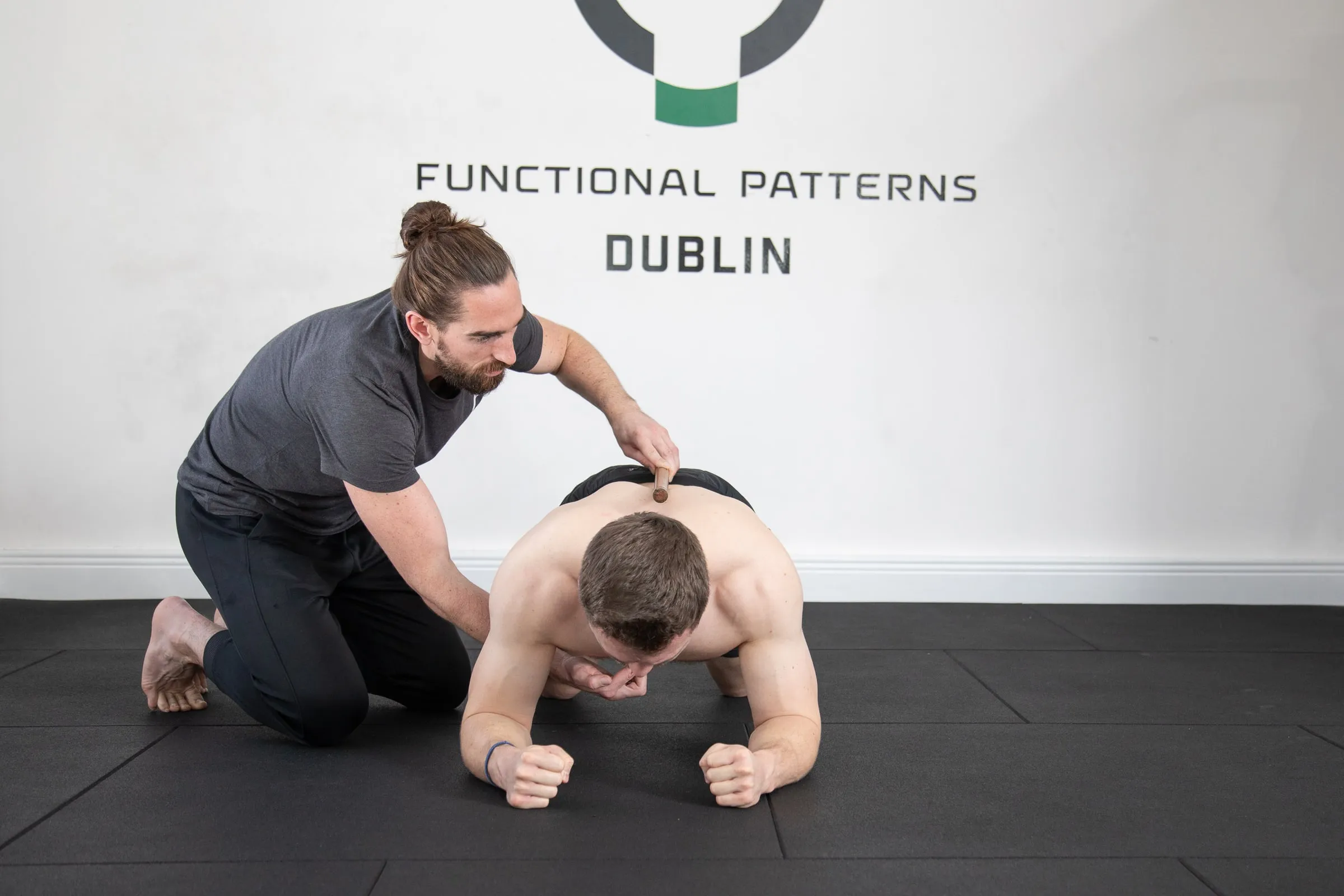
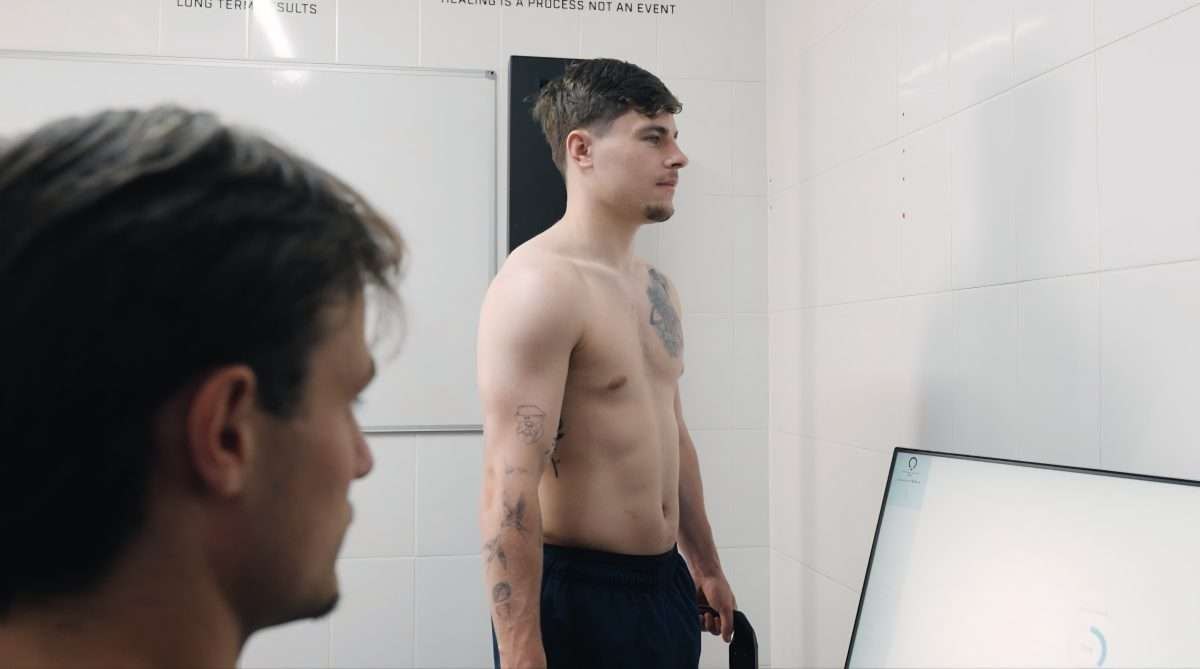
The starting point is a proper assessment. Not just looking at a curve and guessing what to stretch, but understanding how someone moves when they’re not thinking about it. How do they walk? How does the ribcage rotate? How does the pelvis respond under load? These patterns tell us far more than posture cues alone.
From there, the goal is to improve how the body manages these issues during movement. Standing work can help create awareness, but real change only happens when those improvements hold up during walking and everyday activity. Exercise should be about teaching the body to move with less compensation and stress over time.
Final Thoughts
If you’ve been told to simply observe your scoliosis or you’re unsure whether movement is helping or reinforcing the problem, a proper assessment can bring clarity. Looking at how you stand, walk, and manage load can reveal patterns that aren’t obvious from scans or posture cues alone. Understanding those patterns is often the first step toward making meaningful, long-term change. At Functional Patterns Dublin this is our priority, so if you need help, get in touch with us today.
Frequently Asked Questions
Can adults improve scoliosis?
Many adults can improve pain, function and how they move, and some see changes in their posture too. How much the curve itself changes varies a lot from person to person, so it’s best to track progress with objective measures over time.
Should I stop exercising if I have scoliosis?
No. Staying active is generally encouraged. What matters is how you exercise: movement that improves symmetry and pressure management is more useful than a generic routine that reinforces existing patterns.
Do I need an X-ray to know if I have scoliosis?
Yes, a true scoliosis is confirmed on X-ray. Many people who are told they have a “curve” actually have a postural asymmetry, which is why a proper assessment matters.
Still growing? If you or your child are still growing, training should work alongside the monitoring your consultant recommends, not replace it.
You can read more about how we help with scoliosis, see Emma’s scoliosis improvements, or read our post on scoliosis and hip pain. We see clients from across Dublin and beyond at our clinic in Donabate, just 10 minutes from Dublin Airport.