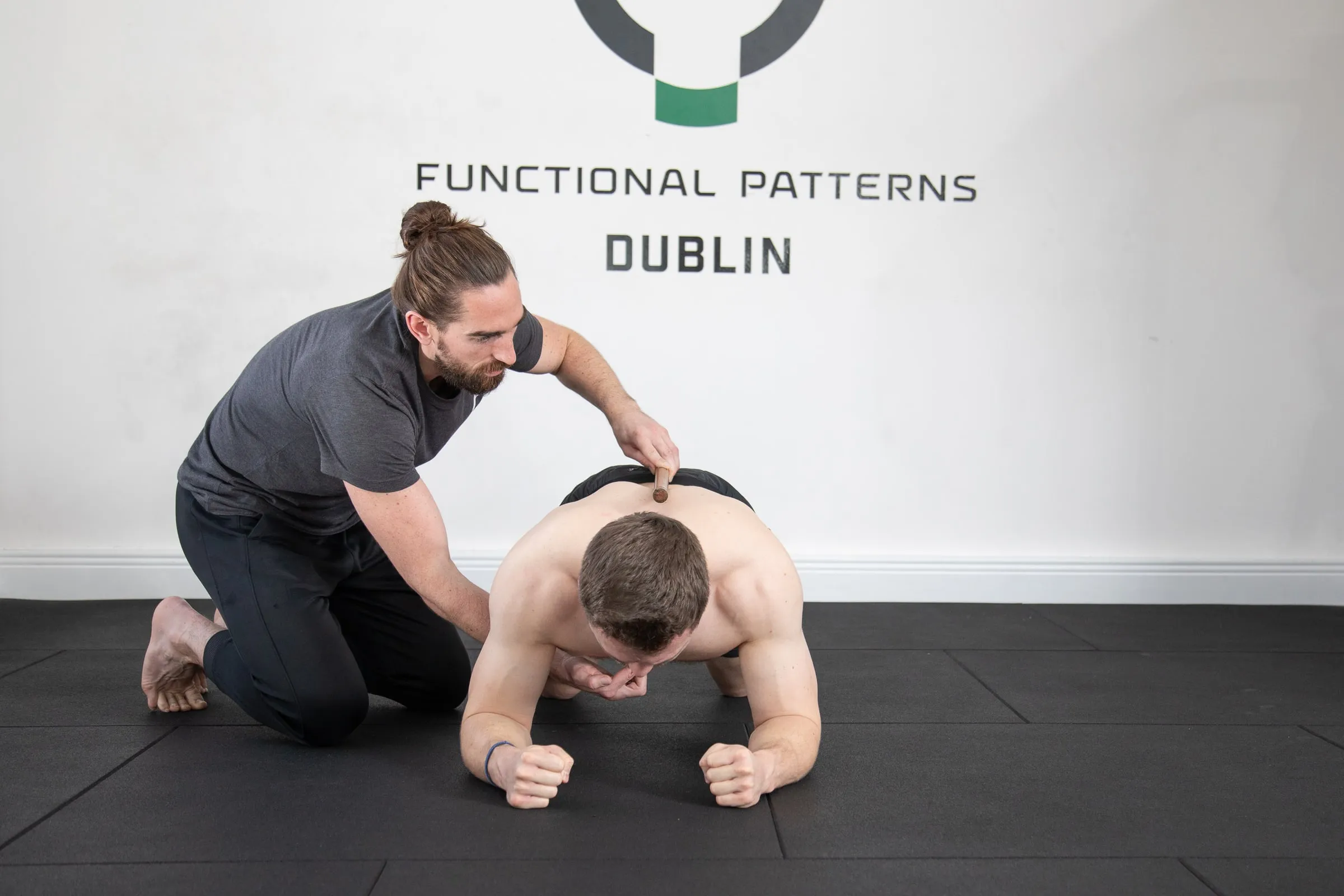
One of the most common questions we get asked in our clinic is:
“Is this exercise god or bad for me?”
The problem is that the answer to this question is not black or white. Even though people would like it to be this simple, movement can’t generally be put into such simple categories, good or bad, functional or not.
In the video above, Tom explains that how even with the same exercise, the outcome can completely change depending on which side of the body is being trained. What actually matter is this:
How does your body organize itself while performing the movement?
This is the real question.
Functional Exercise is About Correcting Imbalance
At its core, a functional exercise is one that helps to correct imbalances and improves how the body organizes itself during movement. It helps you distribute force better, improve posture, create better joint positioning, and move with better efficiency.
Here’s the important part though, a lot of exercises have the potential to do this, but a lot have the potential to reinforce dysfunction. Most people struggle to understand this nuance.
The Same Exercise Can Produce Completely Different Outcomes
Two people can perform the same exercise and get completely different results. One improves while the other slowly accumulates more tension, imbalance, and pain.
Why?
Because the body they bring into the exercise is different. Excessive spinal bending, a pelvic or ribcage shift in the wrong direction, or poor rotational control can all compound asymmetries.
The exercise itself is not the problem, the organization of the body during the exercise is.
Mindfulness is Often the Part People Resist
Real movement correction requires awareness and thought. It requires paying attention to how you shift weight, how you sequence pelvic and ribcage movements, and the timing and rhythm of your body as you move.
That level of mindfulness is harder than blindly copying exercises from social media, but it’s also where long term change actually happens. The body keeps score, and responds to the forces, positions, and compensations created during the movement.
The Exercise Can Be the Antidote or the Poison
The same movement can improve your body, maintain dysfunction, or worsen an issue depending on how it is performed and who is performing it. That’s why chasing random “corrective exercises” without understanding your own movement patterns often leads nowhere.
Instead of asking:
“is the exercise good or bad?”
A better question is:
“What is this exercise teaching my body?”
Because ultimately functional training is not about collecting exercises. It’s about improving the way your body organizes itself during movement. If you want to better understand this, a detailed assessment can help identify the compensation patterns influencing the way you train.