Why do some people suffer more from neck & shoulder pain? Tech neck is a term that has been coined over the last two decades due to the strain and soreness in the neck and shoulders caused by the prolonged, forward leaning posture associated with screen use. While this play on words is not an exact diagnosis and should not be taken as one, it is a very real problem that people are dealing with due to the hazardous nature of modern working environments.
The Problem
With a lot of the population now working from desks and being exposed to long days in front of a screen, incidences of neck and shoulder pain appear to be on the rise. The human head weighs up to 5kg, and tilting forward by just 45 degrees can exponentially increase the strain on your cervical spine making it feel more like 20kg than 5kg.
Combine this with a poor ribcage position due to being seated and you can have a recipe for disaster. It’s not all doom and gloom though. The desk job shouldn’t be looked at as a life sentence as there is a lot that can be done to help the situation. We’ve noticed some patterns in our facility regarding people who work in this environment and why some suffer worse than others. People that tend to be more resilient to desk work teed to have a few things in common.
Why Some Suffer More Than Others
What we’ve noticed is that people with better posture tend to suffer less and be more resilient to prolonged sitting. Some people have better posture than others because they stay more active, however activity is not the only indicator.
We see young people who exercise a lot but have bad posture due to the type of exercise they are doing. Sometimes heavy gym work can exacerbate postural issues and these people can suffer just as bad despite seeming much better off.
The reality is that some people just move better than others, whether that be due to genetics or good exercise programming, posture is often a reflection of how someone moves day to day.
General Advice
Unfortunately, the advice most people receive doesn’t cut the mustard when trying to mitigate the challenges associated with lots of time spent at the desk. Things like “pull your shoulders back”, and take regular breaks can help manage the issue but are not thorough enough to help in any meaningful way.
While ergonomic aspects of the work environment like desk and keyboard height are certainly relevant, these alone won’t offset potential discomfort if the person at the desk has underlying postural issues or imbalances. Standing desks can become problematic if someone doesn’t stand well and can actually exacerbate issues elsewhere in the body if not advised correctly.
From speaking to people who suffer from these issues over the last 10 years, one thing we have noticed is that there is a huge lack of specific advice based on people’s individual posture.
The Fix
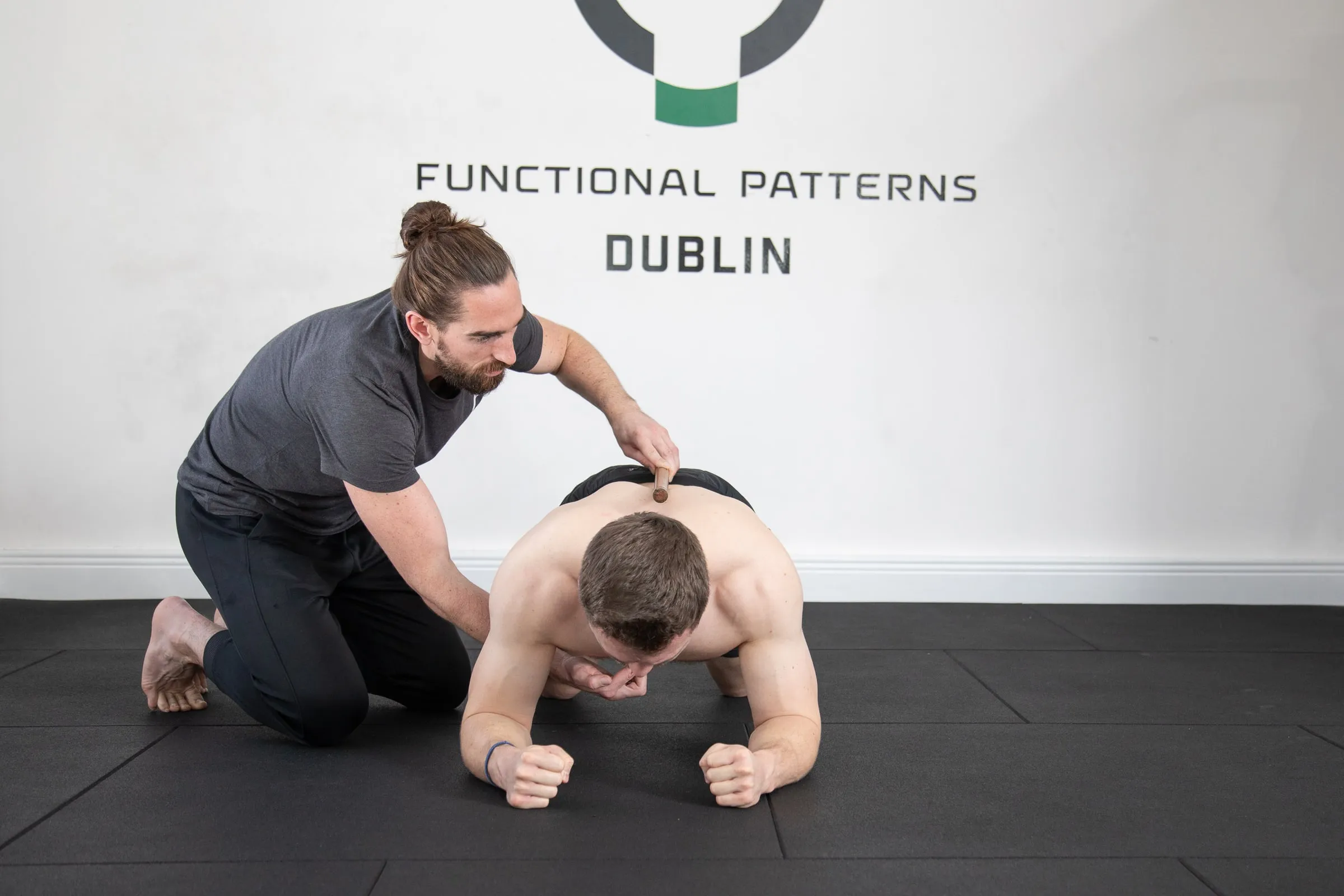
Exercises like planks, rows and hinges all have the potential to help someone’s posture, but they can also reinforce dysfunction if they are performed poorly of prescribed to the wrong person. That’s why chasing random “corrective exercises” without understanding your own movement patterns often leads nowhere.
The real fix is learning what exactly your body is doing when you move. Does your ribcage shift excessively? Does your pelvis move efficiently when you walk, or does it drift forward as you step? These patterns don’t disappear when you sit at a desk, they often become more exaggerated.
This is why posture and movement assessments can be so valuable. Once you understand the underlying mechanics behind your movement, exercises can be selected or adapted to improve the way your body functions rather than simply adding more tension or compensation.
Conclusion
There are no magic exercises or quick fixes, just better understanding, better movement, and better programming. Understanding how your body moves is often the first step toward reducing the neck and shoulder tension that so many desk workers struggle with.