Are you dealing with pain or recurring injuries and struggling to understand why nothing seems to give lasting relief?
You stretch, you strengthen, you rest, and yet the discomfort keeps returning. For many people, this cycle becomes frustrating because they feel like they are doing all the right things but still not getting long-term results. In many cases, the issue is not simply strength, flexibility, or even damage to a specific structure. Instead, it often comes down to how the body is coordinating movement over time.
The One-Gear Car Analogy
A simple analogy we often use with clients in the clinic is to imagine driving a car with access to only one gear. If you only had one gear available while driving, the experience would be a bumpy one to say the least. At times the car would struggle to get moving, and at other times the engine would be revving excessively. Over time, that constant mismatch between the gear and the demand would create more friction, more wear and tear, and a greater need for maintenance. The body operates in a very similar way.
How This Applies to the Body
When we move, exercise, sit, and perform daily tasks, our joints and tissues are constantly managing load. Ideally, the body should be able to shift gears smoothly depending on the demands placed on it. When this happens, movement is more efficient and stress is distributed more evenly throughout the system. When it does not, friction begins to build.
That friction does not always show up immediately as pain. It may first appear as tightness, stiffness, or a sense that certain areas are always working harder than they should. Over time, repeated stress in inefficient movement patterns can contribute to recurring pain and injury.
Movement Is Not Just About Mobility
A common misconception is that pain is simply the result of being tight or weak. This often leads people to focus heavily on stretching random muscles or strengthening isolated areas. While these approaches can sometimes provide temporary relief, they do not always address the underlying reason why the body is experiencing excess stress in the first place.
The real question is not whether you have enough movement, but whether your body is using the right movement strategy at the right time. Just like having more gears in a car is not enough on its own, the key is knowing when and how to use them.
How the Body “Shifts Gears”
In the body, these gear changes relate closely to how structures such as the rib-cage, pelvis, and joints position and coordinate during movement. When these structures are in the right place at the right time, movement becomes smoother, load is shared more appropriately, and unnecessary strain on specific tissues is reduced.
What we commonly see is that many people spend a large portion of their day and training time operating in the same movement pattern or the same “gear.” The body becomes very good at using one strategy, even when that strategy is not ideal for the task being performed. Over weeks and months, this can lead to increased joint friction, compensations during exercise, and repeated overloading of certain areas of the body.
Why Pain and Injuries Keep Returning
If the body consistently stays in an inefficient position strategy, certain muscles and joints are forced to absorb more stress than they are designed to handle. Initially, this may present as minor discomfort, tightness, or recurring niggles. Over time, this increased friction and stress can develop into more persistent pain, especially during exercise or higher levels of activity.
This is why many people feel short-term relief from treatments, only for symptoms to return once they resume normal movement and exercise. The underlying movement “gear” the body is using has not actually changed.
Why Stretching and Strengthening Alone Often Fall Short
Stretching and strengthening can be useful tools, but on their own they are often not sufficient. You can strengthen muscles and still move inefficiently. You can increase flexibility and still place unnecessary stress on your joints. Without improving coordination and positioning, the same patterns that contributed to the pain will continue to reappear.
Focusing only on isolated muscles often overlooks the bigger picture of how the body organises itself during real-life movement.
The Real Goal: Synchronising the Gears
The goal is not simply to move more or to unlock random mobility. It is to improve how well the body synchronises different segments during everyday tasks and exercise. This includes better timing between the ribcage, pelvis, and limbs, as well as a clearer awareness of how the body positions itself under different demands.
When the body can transition more effectively between positions, movement becomes more efficient and less taxing on the system as a whole. In other words, the gears begin to change more smoothly, reducing unnecessary tension and stress on the joints and tissues.
Reducing Friction for Long-Term Resilience
A body that can access and transition between different movement strategies is generally more adaptable and resilient.
Rather than constantly overusing the same areas, load is distributed more efficiently, which can improve tolerance to training and daily activities while reducing the likelihood of recurring pain.
Pain is not always a sign that something is damaged. In many cases, it reflects accumulated stress and inefficiency in how the body has been moving over time. If the body is repeatedly operating in the wrong “gear,” certain areas will inevitably experience more wear and strain than they should.
Final Thoughts
Improving this is not about quick fixes or random exercises. It requires education, awareness, and precise corrective strategies that help individuals understand where their body is positioned, when it is moving efficiently, and when it is not. When the body learns to shift gears more smoothly and at the right time, friction is reduced, movement becomes more efficient, and long-term resilience can improve.
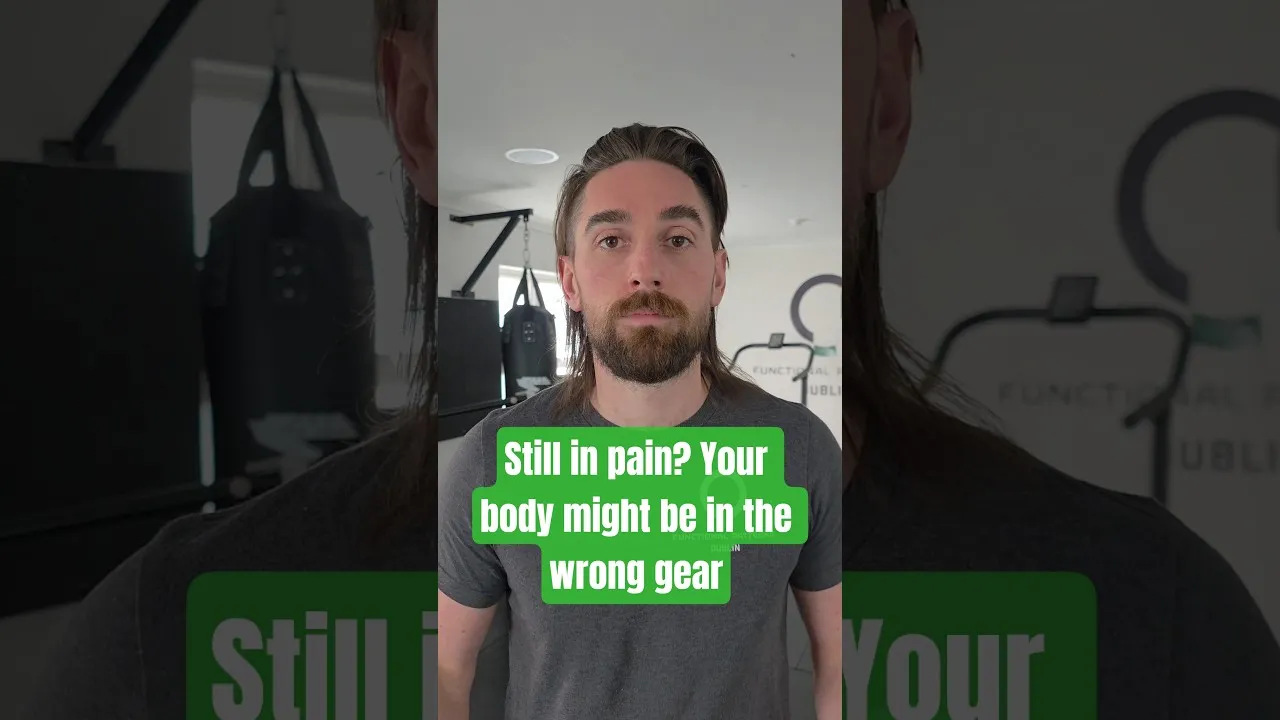
If you are dealing with recurring pain or injuries and want to better understand your movement patterns, you can watch the video above or explore our assessment services at Functional Patterns Dublin to gain clearer insight into how your body is currently moving.