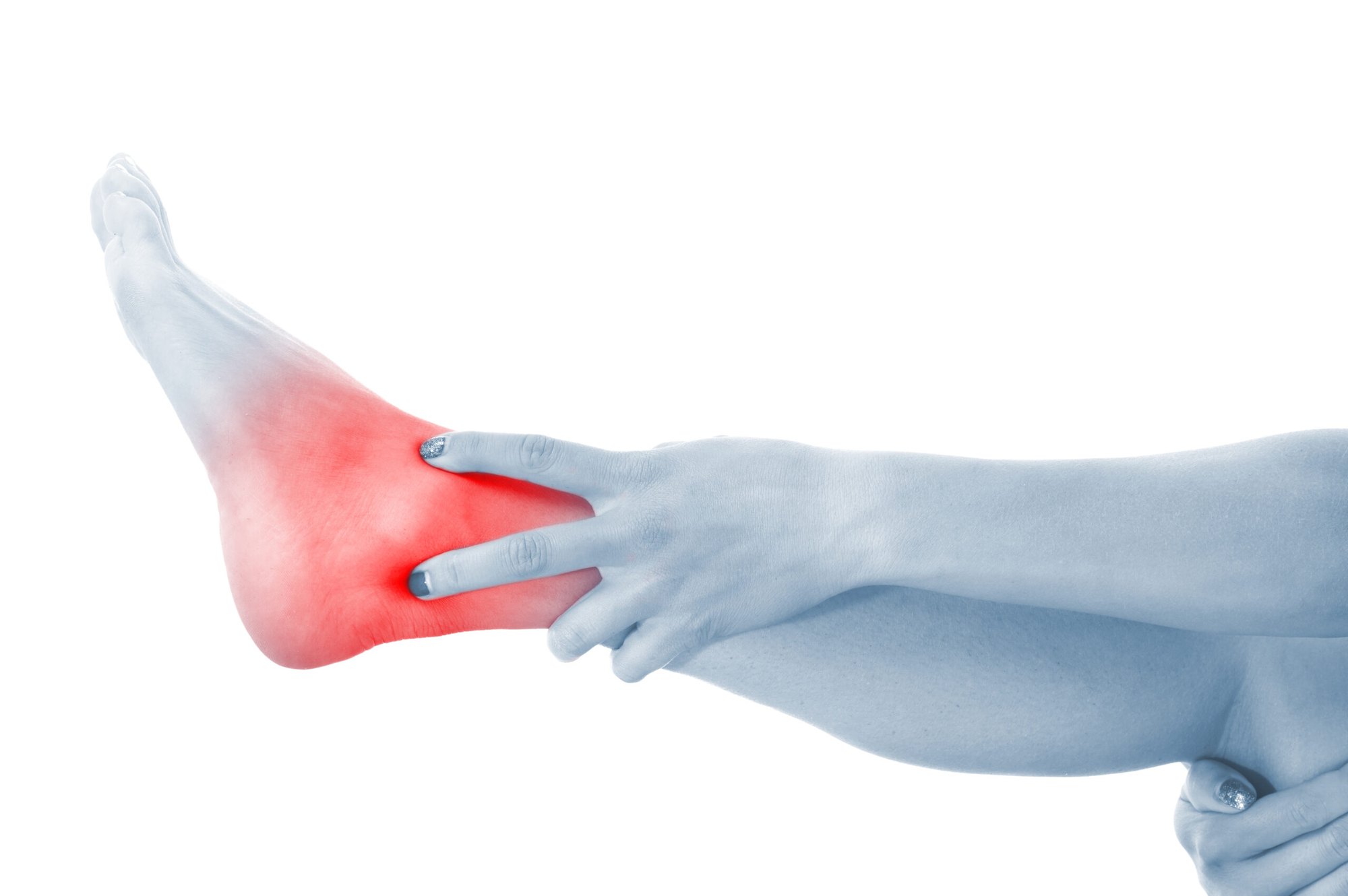
Achilles tendinopathy can be a real pain, and a really debilitating injury. Not only can it put a complete stop on activities like running and field sports, but it can also be a real hindrance day to day affecting people’s ability to do simple tasks like walking. It’s often misunderstood, and treatment strategies often involve lots of calf raises and lots of eccentric loading of the tendon itself. In this short blog we will dig into some of the signs and symptoms that your Achilles tendon may be under pressure, what might be causing it, and what to take into account if you are struggling to get rid of it.
What is the Achilles Tendon?
This tendon runs from our calf to the back of the heel bone, and is continuous with the connective tissue that runs under the foot. It is the thickest, most dense tendon in the whole body and is capable of receiving and generating huge amounts of force when we move. It acts like a spring, suspension system and shock absorber all at the same time when we do high impact activities like running and jumping. A well-functioning Achilles tendon is crucial in order to possess good power and explosiveness when we move.
Symptoms
Achilles issues are often very obvious with the main symptom being pain in and around the tendon itself. It can be extremely stiff in the mornings or when getting up after sitting for a long period because of a lack of blood flow and the tendon being “cold”. Another symptom is a palpable thickening of the tendon or scar tissue formation in and around it. These signs are definitely not to be ignored, as an Achilles tendon rupture is a serious injury requiring surgery. One with mixed outcomes, it would be best avoided.
Causes
There is some confusion around what causes the Achilles tendon to act up. Some would say the tendon is not capable of handling enough load, others would say it is being asked to take too much load. Some suggest that weakness of the muscles above the Achilles mean that too much is being asked of it. It is often said that it is a repetitive strain injury that can be put down to bad load management or training when it comes to athletes.
When it comes to a total rupture, it is clear that in a moment of huge force, the load being put on the tendon exceeds the capacity of the tendon for that load. This is very obvious, but unfortunately when it comes to a longer-term problem like tendinopathy, the causes are not so clear. Although all of the above carry some merit, there are three main things to consider when trying to cover all your bases.
Rehab Strategies
There are three main things we can think about when trying to resolve a tendon injury. These apply to all injuries but are specifically relevant when it comes to tendon issues. Two of these are much easier to account for, and for that reason seem to be the ones most intensely focused on by traditional therapists and trainers. The last is a bit more elusive but is likely the most important of the three.
- Capacity for Load: This one is very often taken into account during traditional rehabilitation. If the tendon does not have the capacity for the load it is being put under, then this is a very rational starting point. Good ways of increasing the load capacity are by progressively overloading the tendon by doing things like eccentric calf raises and a host of other isolated exercises directly targeting the area. Gradually increasing the weight can improve the capacity of the tendon, but doing it in an isolated way may not improve the capacity of load through the whole body.
- Task Specific Practice: This is often a progression once capacity for load has increased. If someone wants to get back to an activity like running, it makes sense to replicate the specific demands of that activity by doing things like plyometrics and jumping/landing drills. If returning to tennis, then lateral shuttles would be good exercises to mimic the demands of the activity. Again you will see these interventions very commonly when it comes to the rehab of an Achilles issue and they are absolutely relevant when it comes to a complete well rounded program.
- Kinetic Chain Integration: This third and final element deserves a little bit more discussion as it is generally something that is done quite poorly. Let’s for a second think of the potential of the whole kinetic chain. It involves a lot of different potential functions like spinal rotations and bending, limb and pelvic rotations, as well as oppositional arm and leg movements. Generally people consider things like single leg squats or deadlifts sufficient in terms of integrating the Achilles tendon to the rest of the body, but given the depth of the kinetic chain it doesn’t seem reasonable to assume stopping there will be enough.
Kinetic Chain is King
While increasing the capacity of the Achilles and mimicking specific tasks are both relevant, what if in doing so you are also compounding faulty kinetic chain mechanics in the process? This is not often considered but if you want the best long term outcome it’s crucial to build on a solid foundation. If I had to do only one of the above it would always be to integrate the kinetic chain. It is arguably the most difficult to do well as there are many more variables involved, and for this reason people generally overlook it.
Good metrics for a better functioning kinetic chain are someone’s posture and how they move in terms of running and walking. During assessment these metrics also tell us where the kinetic chain may be weak and help take the guesswork out of our rehab interventions. At Functional Patterns we measure these things as a priority, and want to see meaningful improvements as well as focusing on the first two on this list. Many practices focus more on those and that’s why we believe these injuries hang around, or reoccur once they have settled.
In our experience, improving how the whole kinetic chain works is what helps issues like Achilles tendinopathy settle and stay settled. If you want to understand how to really get a handle on the kinetic chain element of your training and rehab get in touch today. You can read more about how we help with foot and ankle pain, or see our related post on plantar fasciitis.
Frequently Asked Questions
How long does Achilles tendinopathy take to heal?
It varies a lot from person to person. Mild cases can settle in a few weeks, but longer-standing tendon problems often take three to six months of consistent, well-structured rehab. Addressing how you move, not just the tendon, gives it the best chance of staying settled.
Should I keep running with Achilles pain?
Often you can keep some activity going if pain stays mild and settles by the next morning. Sharp pain, or pain that keeps building, is a sign to cut back and get it assessed.
Is calf raising enough to fix it?
Calf loading is a useful part of rehab, but on its own it may not change the movement patterns overloading the tendon in the first place.
For a real example, read how a carpenter overcame years of back, knee and foot pain. We see clients from across Dublin and beyond at our clinic in Donabate, just 10 minutes from Dublin Airport.