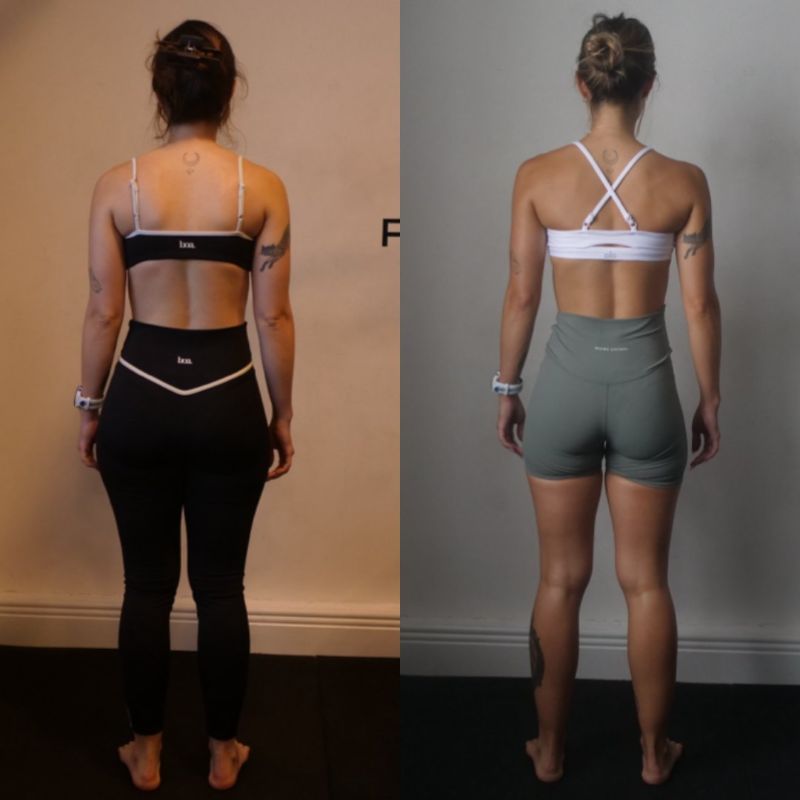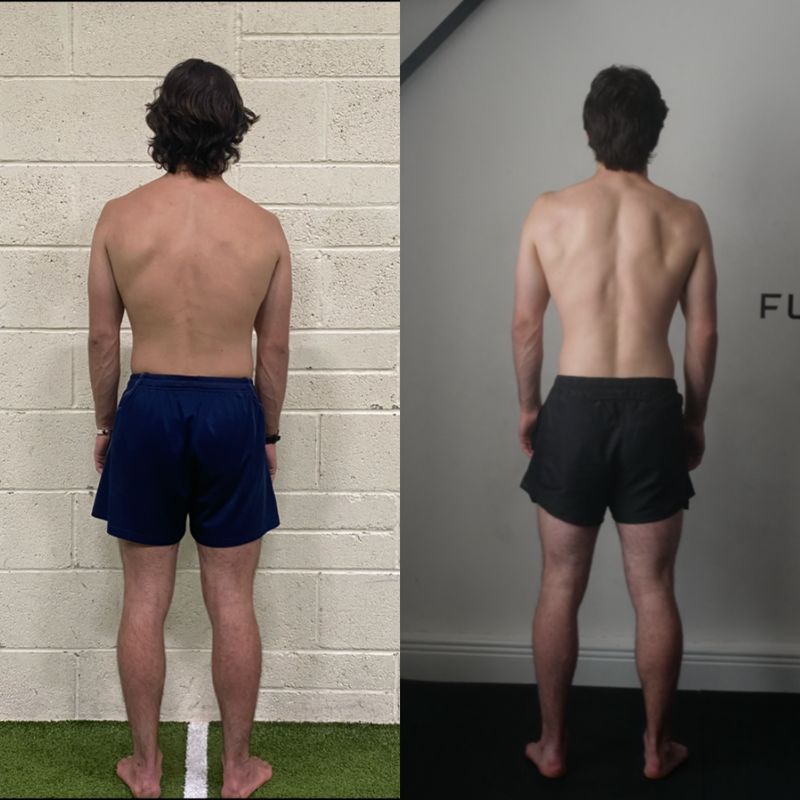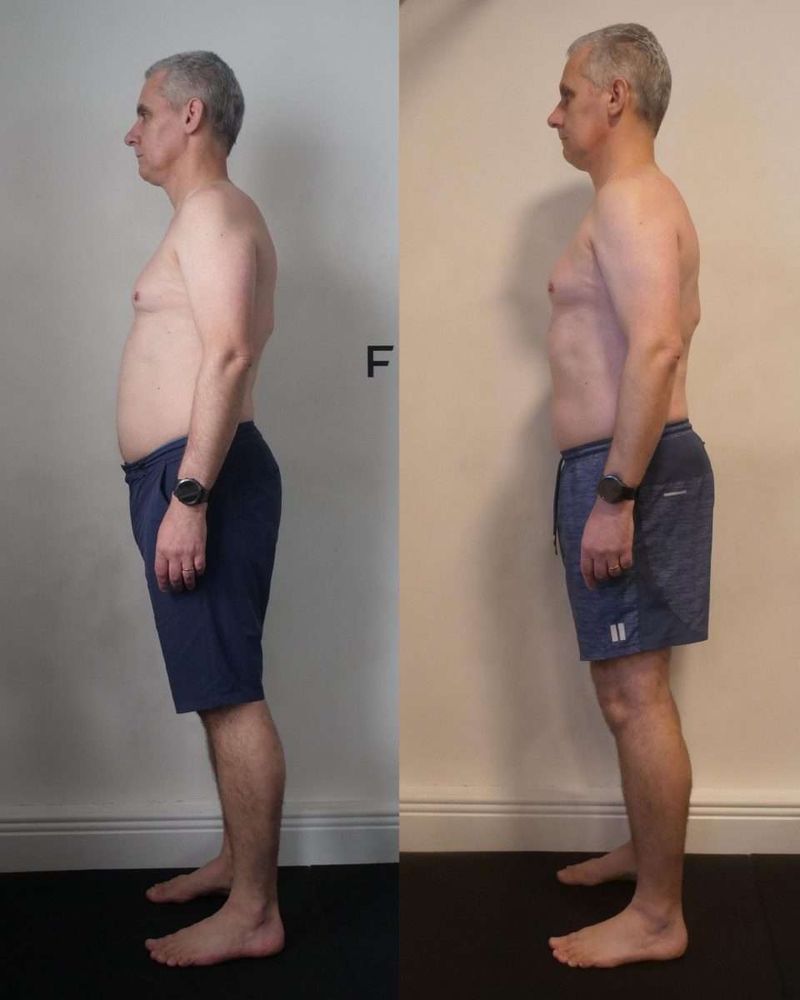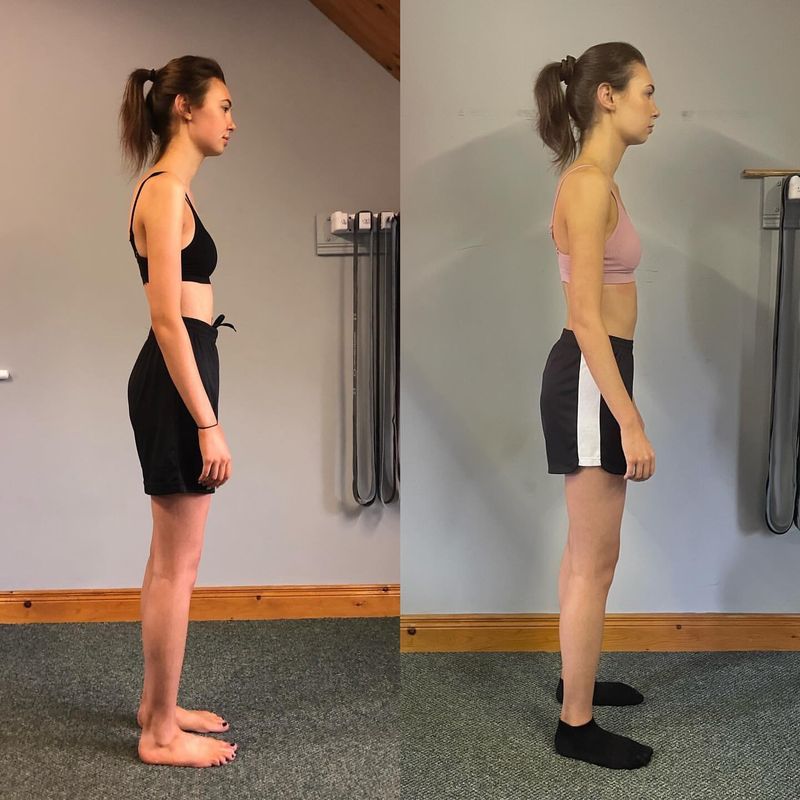
One of the biggest indicators of poor shoulder health is scapular winging. It can also be a symptom of poor pelvic and ribcage alignment, and while not always symptomatic, can normally be paired with some sort of back discomfort due to poor stacking in the body.
What is Scapular Winging
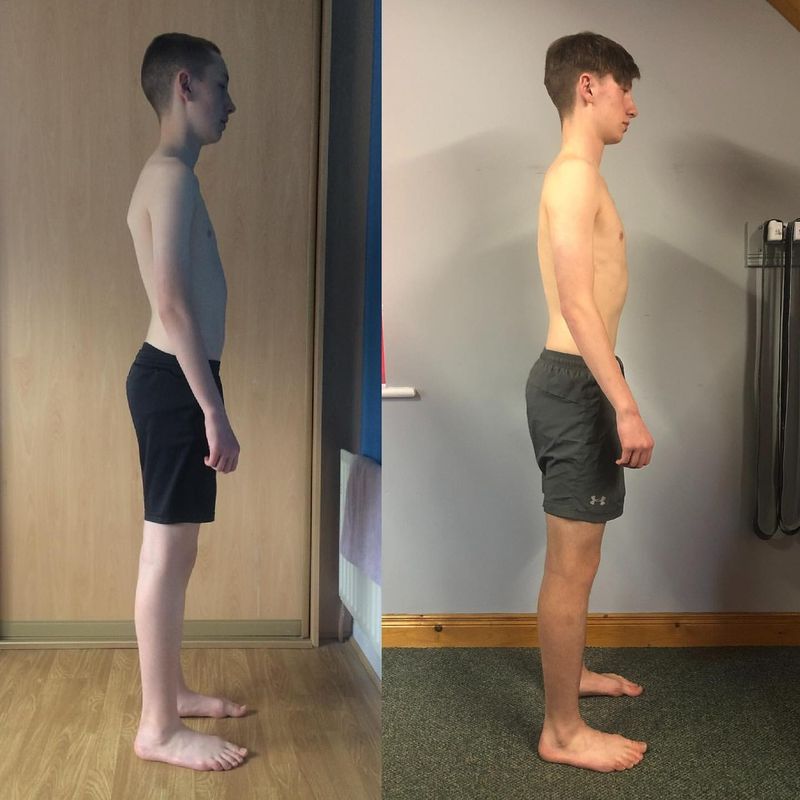
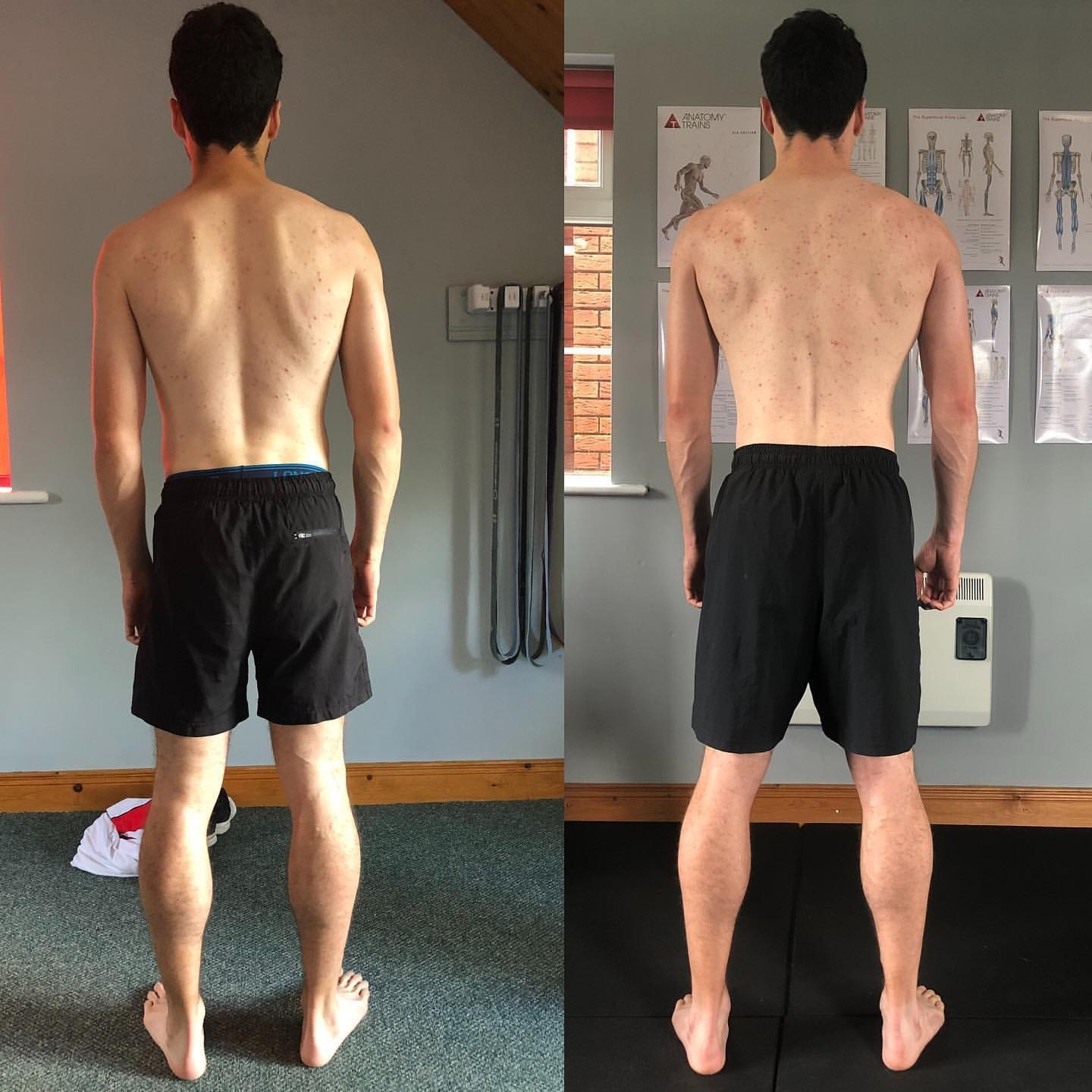
Generally a scapular wing is considered a scapula (shoulder blade) that “wings” or visibly protrudes away from the ribcage like in the before image above. It happens when the scapula sits at the wrong angle relative to the ribcage, and as a result the inside border is visible. This can be the top or the bottom of the scapula, or both depending on the angle of the shoulder blade itself and represents poor muscular support around the shoulder.
Winged Scapula vs Normal: How to Tell
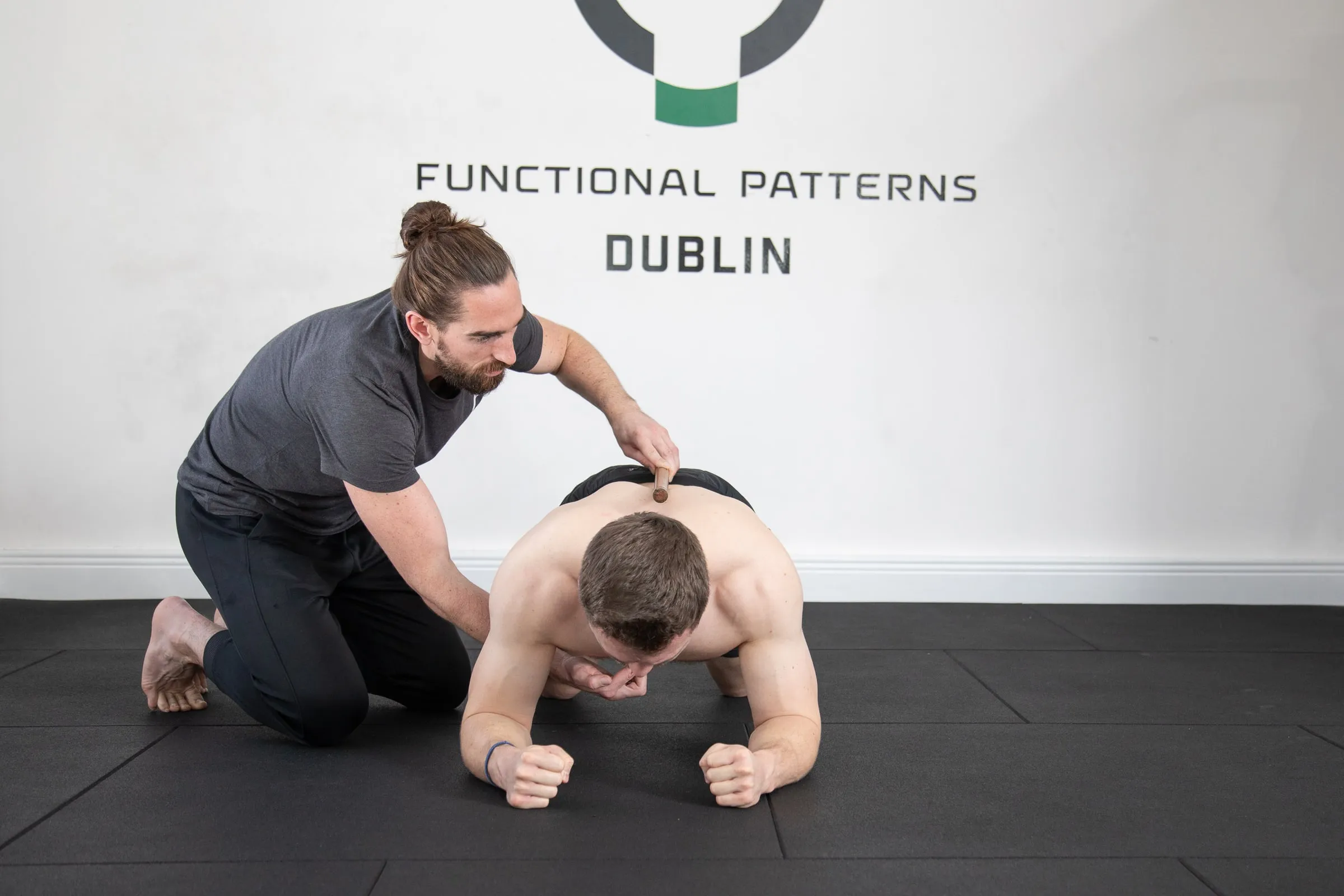
With a normal shoulder blade, the inside edge sits fairly flat against the ribcage, and both sides look roughly even when you’re relaxed or pressing your hands forward. With a winged scapula, the inside edge or bottom corner lifts away from the ribs and casts a visible ridge or shadow, often more on one side, and it usually becomes more obvious when you push against a wall or lower from a press-up.
Mild winging is common and often relates to how the ribcage and shoulder are being supported, as described below. However, if winging appeared suddenly after an injury, or comes with noticeable weakness when lifting your arm, see your doctor, as it can be caused by irritation of the nerve that controls the muscles holding the shoulder blade in place.
What Causes It?
- Poor abdominal and thoracic (ribcage) pressure due to poor stacking of the pelvis and ribcage can be one big reason the scapula wings. Our shoulder joint is the most mobile joint in our body, and as a result almost floats on our ribcage held in place by a careful balance of lots of muscles. If our ribcage is compressed or crushed because of its kyphotic position, the scapula lacks a solid platform to rest on and is more likely to wing.
- People generally assume that they are lacking shoulder mobility when they have shoulder issues, and as such try to mobilise them excessively. Our scapula are the junction between our arms and ribcage, and should provide stability for that connection. If you move the scapula more relative to the arms and ribs than you should, it’s very easy to create hyper mobility in the area. Winged scapula can also be a symptom of too much shoulder blade movement.
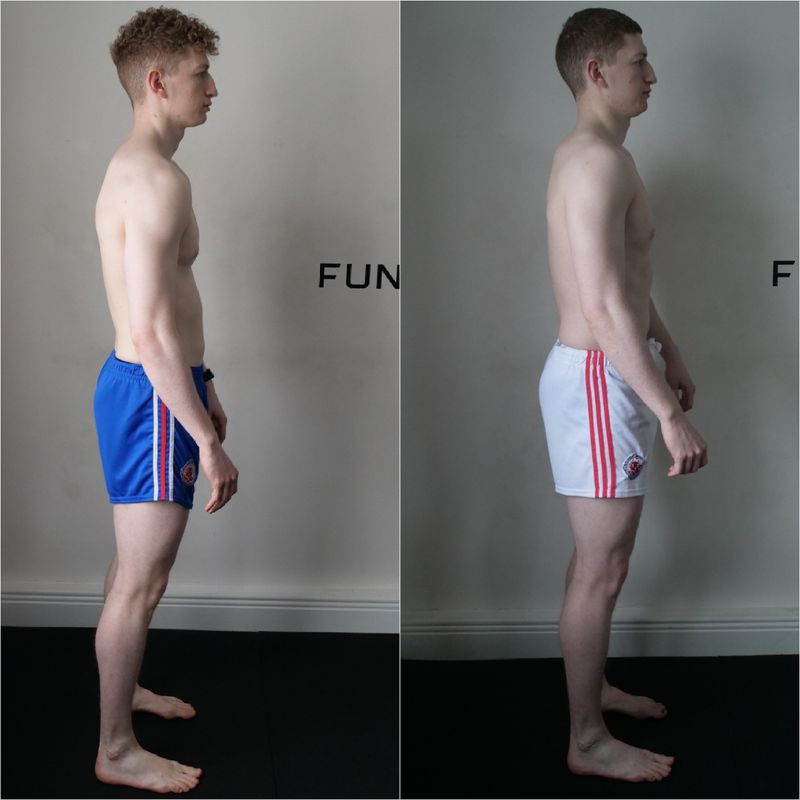
In the above, Shane came to Functional Patterns Dublin with some low back and shoulder pain. As a long distance runner, he needed to be able to handle the training load required to compete in his sport. He trained with us for 11 months and made some good upgrades to his structure.
Before
- Scapular Winging
- Lower Back Pain
- Poor Weight Distribution (leaning left)
- Anterior Pelvic Tilt
After
- No Scapular Winging
- No Low Back Pain
- More Neutral Head and Ribcage Position
- Better Weight Distribution
- Improved Pelvic Position
Both pictures are relaxed and these results were achieved over 11 months. In his time Shane also ran his best 5000m time. His back and shoulder pain are gone, and he now recovers from training much quicker. If you would like to achieve results like this, get in touch with our team and let’s get started.