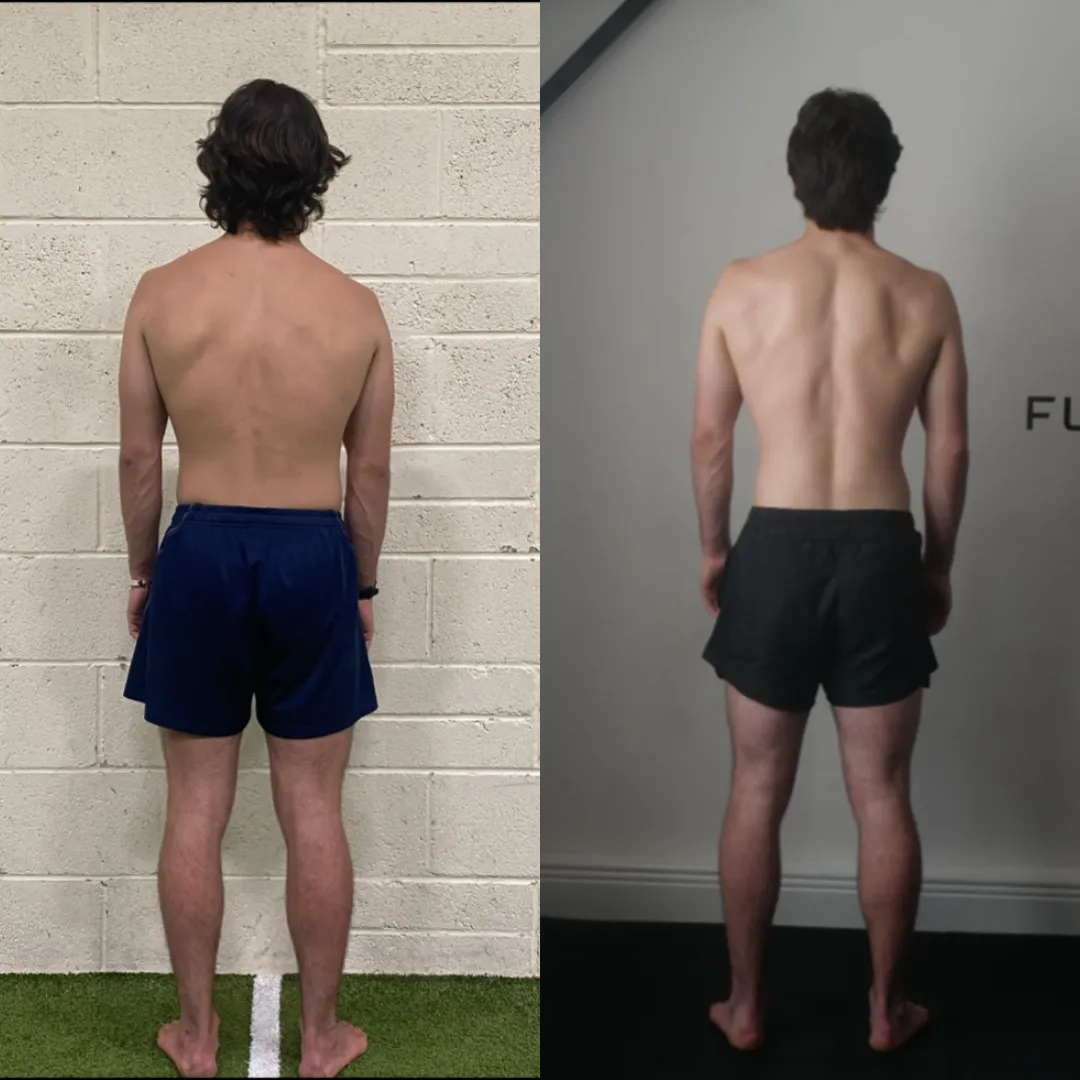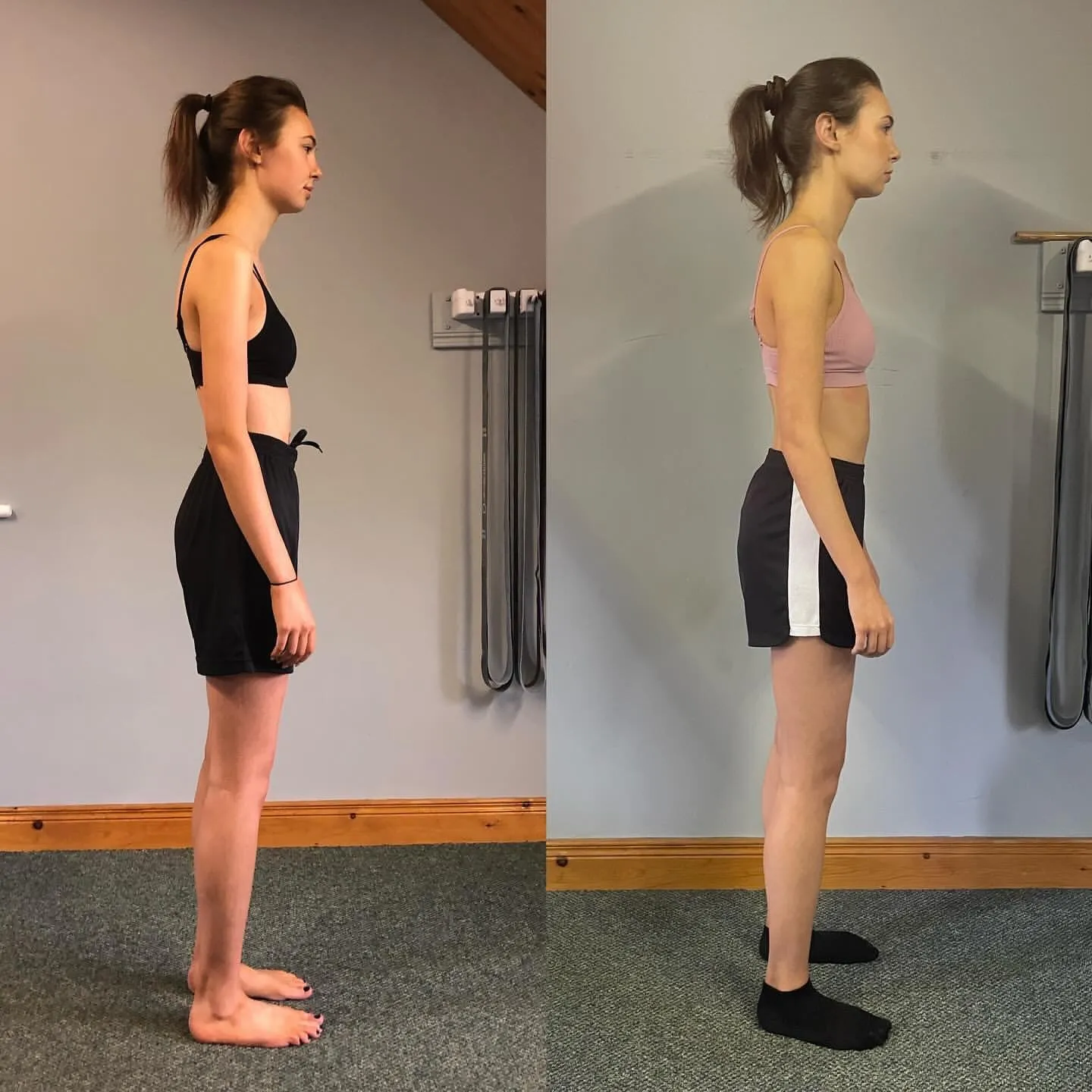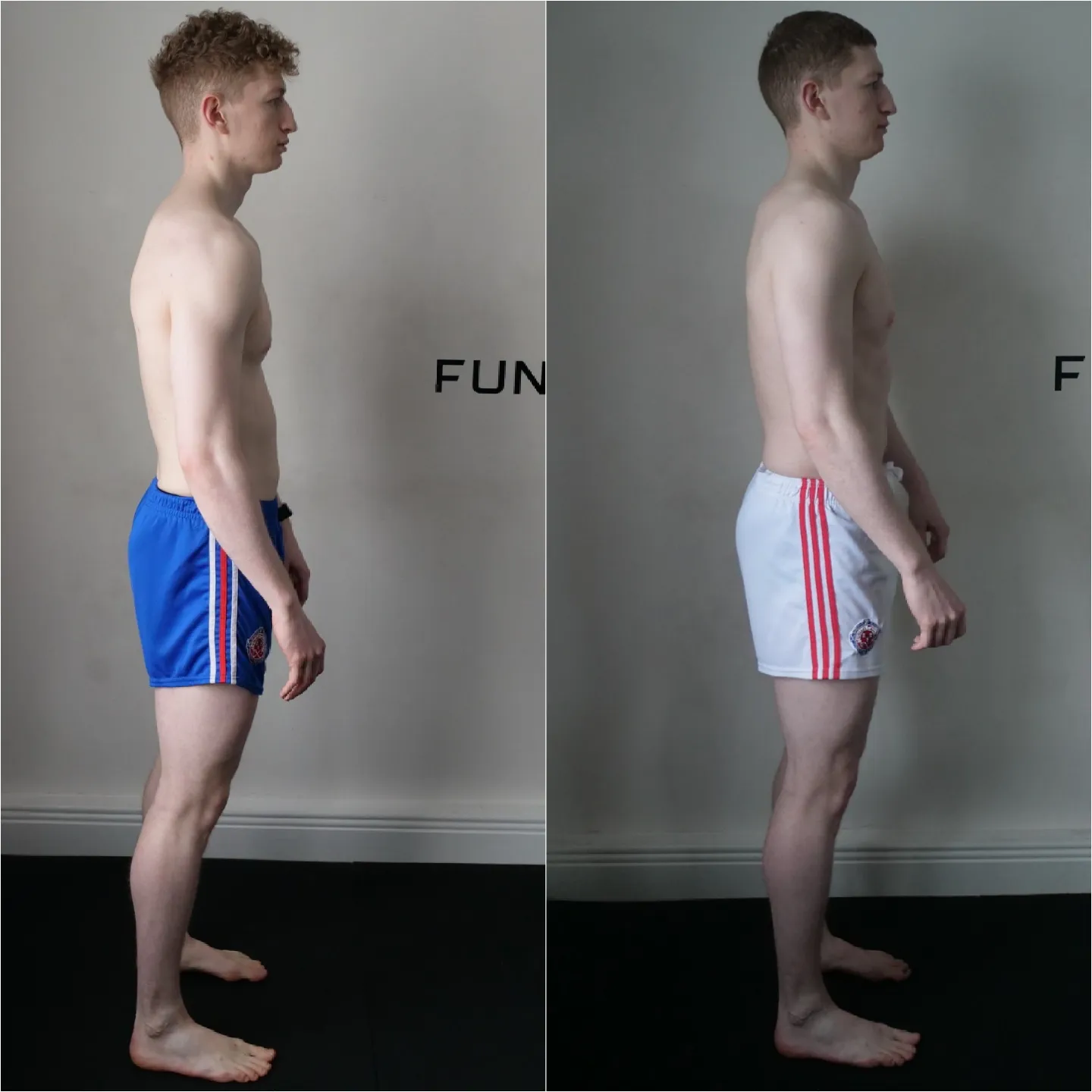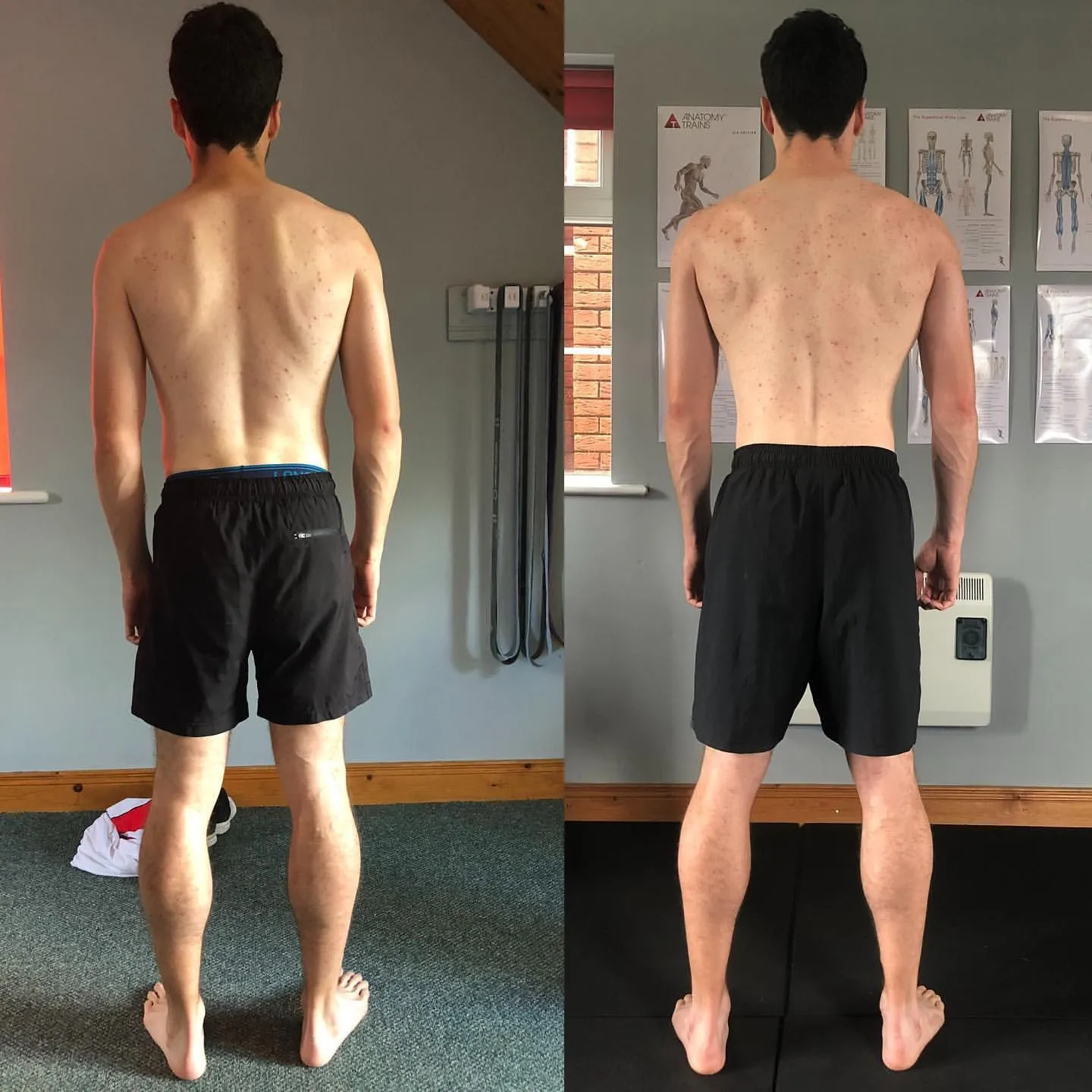
Jorge came to us after years of persistent hip and knee pain that had gradually taken away one of the things he enjoyed the most, running. Rather than focusing only on the painful areas, we assessed how his whole body was moving. His posture, gait, weight distribution, and movement mechanics all revealed compensations that had likely been contributing to the problem over time.
Before and After
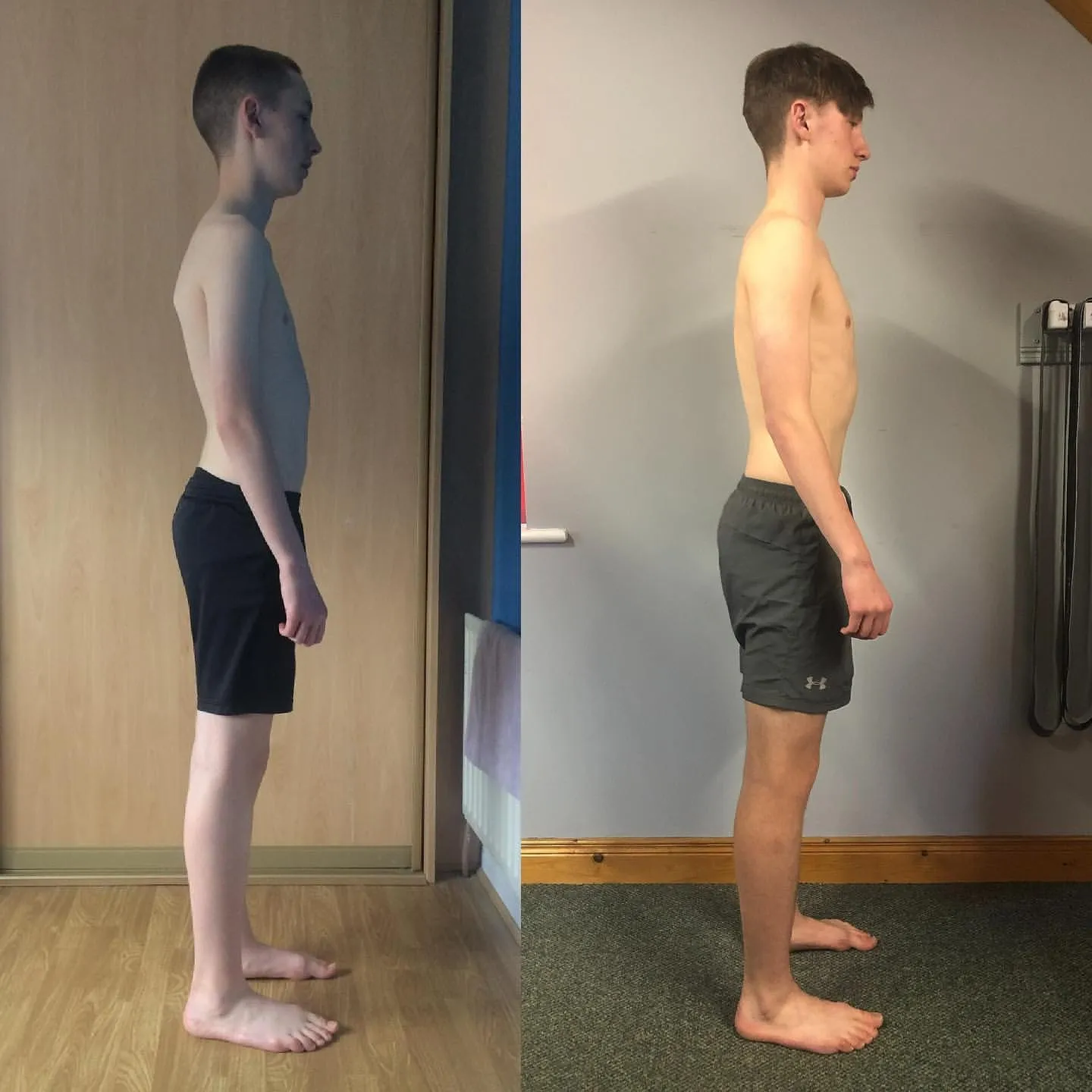
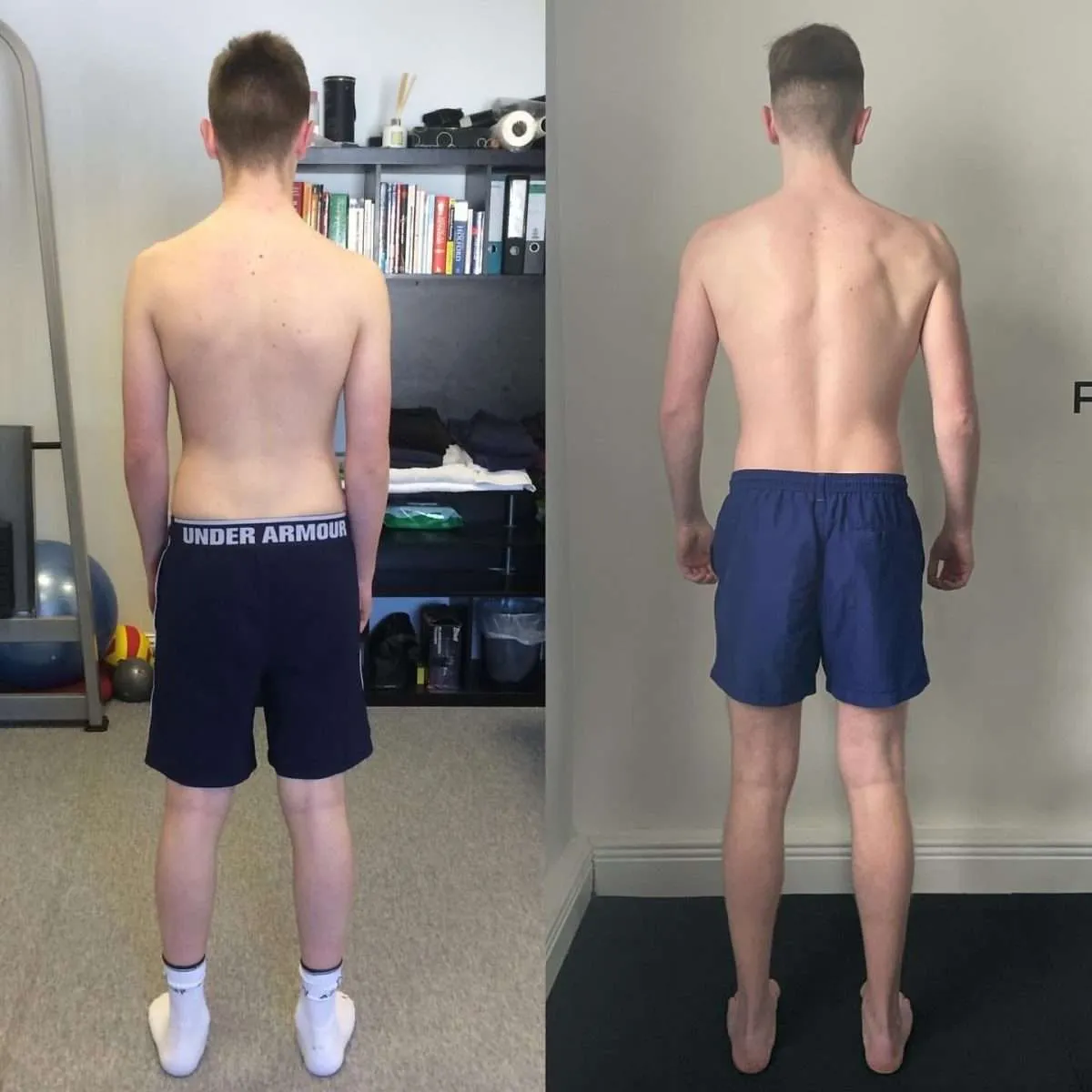
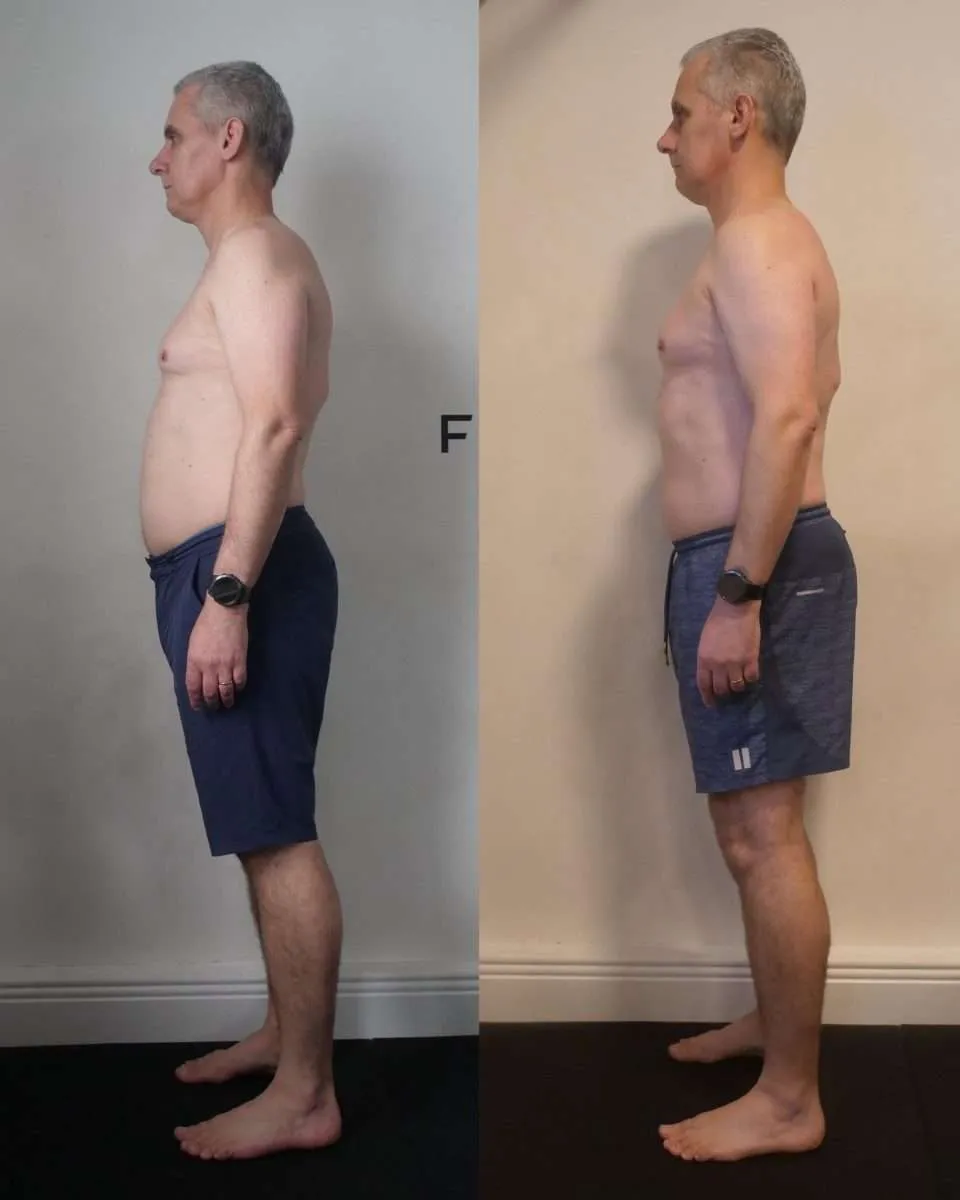
Before Jorge started working with us had a number of annoying issues like low back and hip pain, as well as some knee and ankle pain. Not only this, but he could no longer run which he loved. Our first priority was a thorough postural and movement assessment to identify any potential issues. Our assessment highlighted his rounded shoulders and anterior pelvic tilt. Once done, we were able to put a plan together start working.
These pictures were taken about 18 months apart. Most of this time Jorge practiced what he had learned in our sessions at home by himself, and came in every two or three weeks for updates. Notice his posture is much better. He no longer shifts his ribcage back creating an excessively rounded upper back. He has better core tension and looks more athletic, and generally carries himself with better support.
The Outcome
Jorge was able to improve his posture because he improved the way he moves. Better movement quality often changes the way the body looks because the body is functioning differently. As Jorge’s movement improved, his pain disappeared and he was able to return to running, something he hadn’t been able to enjoy in years.
Every client is different, and results vary, but Jorge’s case highlights an important point. Pain isn’t always caused by the area that hurts. Looking at the body as an integrated system can reveal underlying movement issues that are often missed.
If you’re struggling with persistent hip or knee pain and previous treatments haven’t provided lasting relief, a comprehensive movement assessment may help identify why the problem keeps returning.